AI may be pressing wages, OpenAI cuts model prices, and a continuation brief keeps long projects moving.
 |
Friday, July 31, 2026 |
AI is getting cheaper to run while its effects become easier to see. New research points to slower wage growth in exposed jobs, shopping bots can detect false product claims without helping consumers, and the federal government is turning an old uranium site into a massive data-center campus. Today’s workflow tackles a quieter problem: keeping a long AI project moving after the chat that started it begins to stall. |
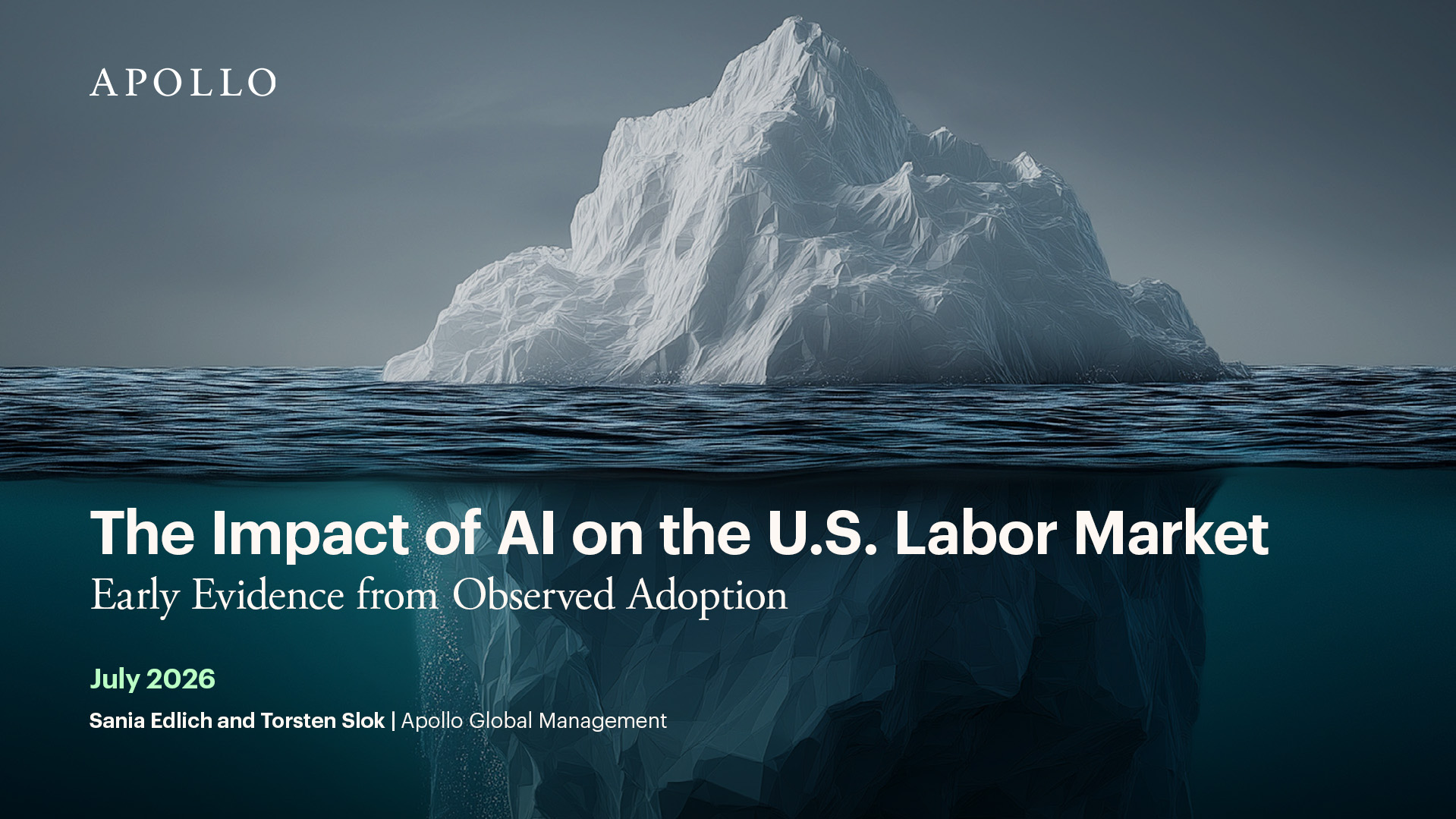 Apollo’s new analysis found slower wage growth in highly AI-exposed U.S. occupations without a measurable drop in employment. Image: Apollo Global Management.
|
|
Top 5
What matters today
|
| 01 |
Apollo analyzed 321 occupations and found that highly exposed jobs had 6.7% slower real-wage growth after 2023, while employment held steady. Pay may show the pressure of AI adoption before job counts do.
|
|
| 02 |
Lower prices make high-volume document work, classification, coding support, and routine agent tasks cheaper to run. OpenAI also added a faster API mode for Sol at twice the standard price.
|
|
| 03 |
The plan includes a 1.8-gigawatt data-center campus, new natural-gas generation, and battery storage. It promises thousands of jobs while adding another enormous energy project to the AI buildout.
|
|
| 04 |
A Columbia Law School study found that the assistants could identify contradictions in product listings. The failure to act shows how company incentives can limit what capable AI tools do for consumers.
|
|
| 05 |
The deal adds behavior monitoring for people, service accounts, and autonomous agents across cloud systems. Identity security is expanding because AI agents can hold credentials and take actions with little supervision.
|
|
|
|
|
AI Workflows
Give long AI projects a clean handoff before the thread stalls
A short checkpoint can save hours of re-explaining decisions, rebuilding finished work, and untangling a tired session.
|
|
Long AI projects can slow themselves down. The chat grows, files pile up, replies slow down, and the model starts revisiting decisions you settled days ago. Many people keep pushing because the thread contains the history. Eventually, preserving that history costs more time than moving the work.
That happened while I was building a cold-outreach system for Fort Smith businesses. The project included a live dashboard, research on each lead, tailored messages, and a long trail of decisions about tone and workflow. One session stalled after a lot of useful work. I opened a new chat, linked the earlier thread and the working system, told it to preserve completed work, and made it determine the exact state before continuing. The fresh session moved faster because it had the facts. This newsletter uses the same pattern. Each edition starts with the last finished HTML, the editorial rules, and a list of stories already used. Those files carry the design choices and duplicate checks forward. A single conversation no longer has to hold every detail.
Treat the working artifact and a short checkpoint as the project’s memory. Use the chat for the current work. Before a session becomes unreliable, save the goal, current state, completed work, locked decisions, live links or files, unresolved problems, and the next small action. Add a brief “do not redo” note for anything already approved.
Start the new session with the old share link, the current artifact, and that checkpoint. Ask for a state check before any edits. The model should tell you what works, what remains, and which action it will take first. Correct its summary before it touches the project. That pause can prevent a fresh session from rebuilding something you liked or fixing a problem that no longer exists.
Continue this project from its current working state. Review the previous thread at [SHARE LINK], the live artifact or files at [LINKS], and the checkpoint below. Preserve completed work and locked decisions. Before making changes, return a brief state check covering: what works now, what is complete, what remains unresolved, and the next smallest testable step. Then complete only that step, verify it against the live artifact, and update the checkpoint.
Checkpoint
Goal:
Current state:
Completed work:
Locked decisions:
Do not redo:
Open problems:
Next action:
Update the checkpoint at the end of each work period. It can live in a markdown file, project note, shared document, or plain text. Keep it short enough for a new session to absorb in one pass. Long projects stay fast when progress lives in durable files and each chat receives a clear assignment.
|
|
|
AI tool spotlight
One tool worth a look
|
|
Memmy is a free, open-source desktop memory hub that gives several AI tools access to the same project context.
It can scan authorized local histories from tools such as Cursor, Claude Code, and Codex, turn scattered decisions into structured memory, and send each agent the relevant slice. That fits today’s handoff problem well. Memmy says its stored memory stays on the user’s device, and users choose which agents can access it. The desktop app supports Windows 10 and macOS 12 or later.
|
 Memmy keeps AI-project memory local and shares selected context across compatible tools. Image: Memmy.
|
|
|
More worth knowing
Headlines
|
|
Work, wages and real deployment
|
|
Apollo Global Management
Apollo analyzed 321 occupations and found that highly exposed jobs had 6.7% slower real-wage growth after 2023, while employment held steady. Pay may show the pressure of AI adoption before job counts do.
|
|
TechCrunch
A new estimate puts the pool of elite U.S. forward-deployed engineers at roughly 2,000, while 70% of surveyed companies now plan to hire for the role. The shortage reflects a shift from model access to measurable results.
|
|
QCI
Jarvis coordinates projects, priorities, issue escalation, and customer support. QCI says the latest version cut average ticket-resolution time from three weeks to 1.8 weeks.
|
|
ABI Research
ABI Research named Siemens and Tulip as leaders in manufacturing software because their tools focus on practical advice, governed data, auditability, and human review.
|
|
AP News
Microsoft shares jumped after the company showed stronger returns from its AI spending. The rally suggests investors still reward heavy infrastructure costs when revenue follows.
|
|
Marquee
The system combines scouting reports, video, tracking data, and performance records into shortlists and reports. The company plans to expand further into basketball and American football.
|
|
|
|
Products, consumers and trust
|
|
OpenAI
Lower prices make high-volume document work, classification, coding support, and routine agent tasks cheaper to run. OpenAI also added a faster API mode for Sol at twice the standard price.
|
|
Reuters
A Columbia Law School study found that the assistants could identify contradictions in product listings. The failure to act shows how company incentives can limit what capable AI tools do for consumers.
|
|
The Verge
Mark Zuckerberg said the agents should work around the clock and be simple enough for broad consumer use. Meta says more than 1 million businesses already use its business agents each week.
|
|
The Verge
The wearable can now answer aloud and charges $10 a month for longer memory. The relaunch tests how much consumers will pay for an always-listening AI companion.
|
|
The Verge
Gemini Robotics 2 supports walking, crouching, object handling, and finer hand movements. Google says the model can also stop a robot when it detects a nearby person.
|
|
|
|
Security, infrastructure and public systems
|
|
AP News
The plan includes a 1.8-gigawatt data-center campus, new natural-gas generation, and battery storage. It promises thousands of jobs while adding another enormous energy project to the AI buildout.
|
|
Okta
The deal adds behavior monitoring for people, service accounts, and autonomous agents across cloud systems. Identity security is expanding because AI agents can hold credentials and take actions with little supervision.
|
|
FTP
FTP’s new initiative includes a dashboard that sorts bills, hearings, news, and market events by issue area, along with synthetic audiences for testing campaign messages.
|
|
Labrynth
The platform organizes requirements across agencies and identifies the next action in complex approval work. The White House permitting expo will consider tools for wider federal use.
|
|
OpenAI
Users can ask about changes in lab results, appointments, sleep, activity, and medical history. OpenAI says connected health data and related chats are excluded from model training and ad targeting.
|
|
|
|
Global headlines
|
|
AP News
The planned facilities would each hold at least 100,000 advanced AI chips. Europe hopes to attract another $22.8 billion in private investment and reduce its reliance on U.S. and Chinese infrastructure.
|
|
AP News
The company posted $62 billion in operating profit and plans more production capacity, including another chip plant in Taylor, Texas. Investors still worry about the scale of future spending.
|
|
AP News
Open models from China have climbed usage charts because they are cheap and easy to adapt. Their rise adds pressure to U.S. companies and raises new questions about data, policy, and dependence.
|
|
Reuters
The initiative covers semiconductors, critical minerals, advanced manufacturing, and AI models. The agreement brings Italy into a U.S.-led effort to reduce reliance on less trusted suppliers.
|
|
|
mAIn Street is built for nontechnical readers who want the signal, not the sludge. |
|
|
|