A welcome to new readers, a call to slow advanced AI, and practical developments for the week ahead.
 |
| Monday, September 14, 2026 · Edition 310 |
|
Good morning,
We had four editions last week. I got behind with the presentation I gave on Wednesday, and one edition got away from me. Even so, our subscriber count grew, and I’m incredibly happy to see all the new faces here. Welcome to mAIn Street, and thank you for being here.
|
|
TODAY’S THROUGHLINE
AI is taking on bigger jobs, and the work of checking it is growing too.
|
|
|
TOP 5
Five stories to start your week.
|
|
01
Dario Amodei · Sept. 12
In a weekend essay, Dario Amodei proposed coordinated safety standards and ongoing access for independent evaluators inside AI labs. Anthropic committed to outside evaluators that could publish findings without the company’s editorial control.
|
|
|
02
Salesforce · Sept. 11
Six agents are generally available; Hunter, its outbound sales agent, is in pilot with a November release planned. The lineup includes help with customer questions, shopping, IT and HR requests, supply chains and sales leads.
|
|
|
03
eDreams ODIGEO / OnePoll · Sept. 11
In OnePoll’s seven-country survey for eDreams ODIGEO, 61% of employed U.S. respondents welcomed access to AI tools and courses from their employer. For managers planning training, that suggests an audience willing to learn.
|
|
|
04
Reuters · Sept. 11
A court order imposed a $5,000 fine after an appeal brief included made-up witnesses and police testimony. The lawyer had used ChatGPT to summarize the trial; the defendant’s appeal now has new counsel.
|
|
|
05
Munters · Sept. 11
The Daleville campus now includes local chiller production, technician training and new testing facilities. The 565,000-square-foot site has nearly 600 employees, showing the manufacturing and service work behind the AI buildout.
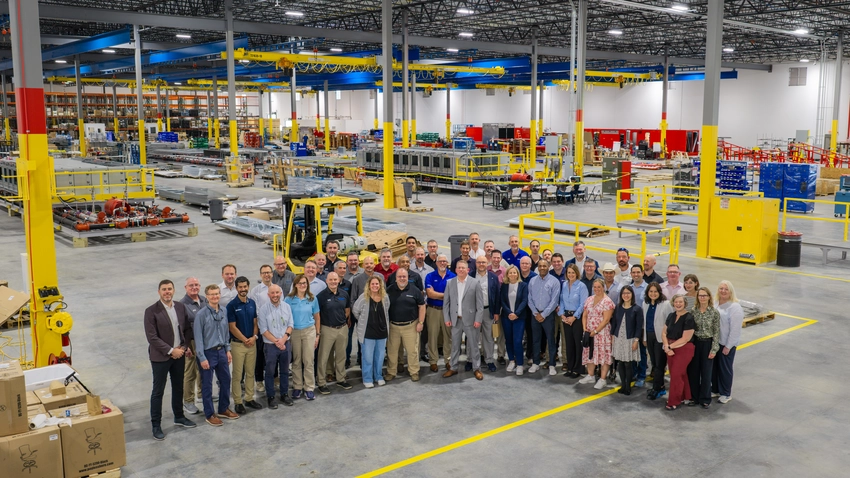 The expanded Daleville facility adds manufacturing, testing and training space. Photo: Munters.
|
|
|
AI Workflows | Monday: AI capability mapping
ChatGPT can turn your business questions into working dashboards.
At Wednesday's marketing workshop, I showed participants my Trick-or-Treat! game, which I've mentioned here before. They hadn't realized ChatGPT could help build games, and none had heard of Sites. We discussed how a business could use a game to get people interacting with its brand.
That reaction reinforced my concern that too many people still judge AI by what amazed them in 2023. Writing and image generation give you a very incomplete picture of what these systems can do now.
Monday's skill, capability mapping, means matching a job you need done to the capabilities available now. You identify what AI can handle and where your judgment belongs.
Games are one possibility. ChatGPT can research accessible public sources, organize the findings, and use Sites to build a dashboard around them. You can ask for filters that make the information easier to explore, plus a button exporting every record to Excel. You get the dashboard and the spreadsheet.
Give it a question from your work.
Say you handle marketing for a local business. You want to compare upcoming community events that might put you in front of potential customers.
Tell ChatGPT where you operate, who you want to reach, and your budget. Then divide the work:
| Delegate |
Research event pages, organize the records, and build the dashboard and export. |
| Review |
Check source details and audience assumptions. Try the filters and download. |
| Decide |
Choose which events deserve your time or money. Approve any outreach. |
In ChatGPT Work, mention @Sites and give it this assignment after describing your business:
|
Find up to 10 upcoming community events in my area over the next 90 days, using public organizer websites. Build a Sites dashboard to help me compare them. Include dates, locations, published participation costs, source links, and the date you checked each record. Mark missing information and separate your audience-fit assessments from documented facts.
Add date and location filters, plus an Excel export containing every record and source link. Test the controls and confirm the exported data matches the dashboard's complete dataset. Show me the working preview and any access limitations. Wait for my approval before publishing or contacting anyone.
|
You'll need an eligible paid ChatGPT plan with Sites access. Check availability here.
For managers and owners, have one employee try this on a recurring research task. Ask whether the finished tool helped them make a decision and how much checking it required.
Start with one question you've been putting off. Before using the results, verify two records against their sources and open the exported spreadsheet.
|
|
|
AI TOOL SPOTLIGHT
Epilude combines dictation with a meeting notetaker that creates transcripts, editable summaries and action items. It captures audio from your Mac, so there is no meeting bot to invite, and its local processing keeps that work on the device.
Try it for: a team meeting where decisions and follow-up tasks are easy to lose. Let participants know you’re recording, then check the summary, names and deadlines before sharing the notes.
Mac only. A trial is available. Explore Epilude →
|
|
|
MORE AI NEWS
Headlines
|
Weekend news and recent developments to carry into Monday. |
Work, skills and creative tools
Salesforce · Sept. 11
Teams can choose agents for specific jobs, including customer help and IT requests. Hunter, the sales prospecting agent, can pursue goals over days or weeks and remains in pilot.
eDreams ODIGEO / OnePoll · Sept. 11
The survey covered 9,000 adults across seven countries, with workplace questions directed to employed respondents. In the U.S., 61% responded positively to the prospect of employer-provided AI tools and courses.
Avid / Google Cloud · Sept. 11
Media Composer can now run in Chrome, while its Google Cloud integration helps editors locate footage, transcribe dialogue and organize projects with ordinary language. The changes target the preparation work surrounding an edit.
ElevenLabs · Sept. 11
The new default model aims for richer arrangements and more natural instruments. Free users get five lossless downloads daily; downloads remain blocked for tracks that reference other artists’ songs.
CINC Systems · Sept. 11
Its latest update describes nearly half a million invoices coded with AI this year and work on almost 2,500 budgets. These are company-reported figures; authorized people retain responsibility for approvals and decisions.
OpenAI · Sept. 10
The Agents API, now in public beta, supplies the infrastructure behind Codex for developers building business applications. It can preserve context across long sessions and coordinate tasks involving files, tools and multiple steps.
Cognition · Sept. 10
SWE-2 is available in Devin Desktop and its command-line tool. Cognition reports better test results with fewer steps than its previous model, making it another option for teams watching the cost of AI development.
Math and AI declaration · Sept. 11
Their declaration argues that racing to announce solutions can shortchange verification, attribution and the teaching that develops new researchers. They want AI progress to strengthen the field’s understanding and its ability to pass knowledge on.
|
|
Healthcare and customer service
Penguin Ai · Sept. 11
The system reviews billing issues before claims go out and helps staff investigate denials and underpayments. Its findings include supporting evidence; healthcare organizations keep final review, approval and submission responsibilities.
Mayo Clinic Platform · Sept. 11
In a new column, John Halamka and Paul Cerrato recommend supervised exercises that deliberately include errors. They argue that clinicians need practice checking AI recommendations, including experienced professionals who may trust automation too readily.
Five Elms Capital / UrgentIQ · Sept. 11
The investment will fund development beyond medical records, including billing, insurance verification and checkout. The company is targeting the administrative steps that connect a walk-in patient’s visit with documentation and payment.
Brand Engagement Network · Sept. 11
Accelevate and BEN’s mobile experience gives off-airport parking and shuttle passengers routes, vehicle locations and estimated arrivals without an app download. The service is live; paid advertising is planned for the fourth quarter.
|
|
Trust, safety and accountability
Reuters · Sept. 11
The court also referred the lawyer for disciplinary review. The defendant’s appeal remained pending, showing how unchecked AI summaries can reach work with consequences far beyond an inaccurate document.
The Verge · Sept. 11
A parent found suggestions asking about a child’s identity, family details and location. Meta said it fixed prompts involving personal topics and said the feature used only content the person asking could already access.
Independent researchers · Sept. 11
A new investigation attributes malicious package uploads and attempted credential theft to an agent swarm. The authors analyzed public records and lacked OpenAI’s internal agent logs; they could not confirm whether the theft succeeded.
FAZE Security · Sept. 11
The company emerged from stealth with a system that tests customers’ applications and cloud systems within set limits. Findings include working evidence, a responsible owner and a repair path, followed by repeat testing.
RTTNews · Sept. 10
Their proposed Know-Your-Agent framework would help payment networks recognize verified agents and connect them to the people or businesses behind them. Each network would retain its own verification and decision-making processes.
|
|
Public policy and civic life
Dario Amodei · Sept. 12
Amodei’s proposal pairs industry coordination with independent review of models and internal processes. Anthropic’s commitment gives evaluators ongoing access and freedom to publish findings, subject to limited redactions.
City of Austin / ACC monitoring body · Sept. 11
The independent community-college monitoring group credited public engagement but called for clearer definitions, broader resident participation and more transparent reporting. Its assessment shows students helping scrutinize how local government follows through on AI policy.
Reuters · Sept. 13
Reuters, citing a New York Times account of a private fundraiser, reported that the former president called for a public policy discussion and concrete plans from future presidential candidates as AI capabilities advance.
Reuters · Updated Sept. 11
Sen. Mark Kelly urged Washington to address AI risks, while Sen. Ted Cruz pointed to legislation on catastrophic risks. Rep. Anna Paulina Luna called for a special House session as warnings from researchers intensified.
|
|
Money, manufacturing and energy
Munters · Sept. 11
The Daleville expansion brings chiller production previously handled in Italy to the U.S. The campus also adds training and testing capacity, illustrating the demand for skilled manufacturing and service work around AI infrastructure.
Environmental Protection Network · Sept. 10
Their new report identifies 30 federal actions they argue weaken pollution safeguards during the buildout. It calls for measuring emissions and health effects from both on-site equipment and the power plants supplying data centers.
Reuters · Sept. 12
Sam Altman told Fortune that safety work and coordination with industry and governments take priority, according to Reuters. He said the company feels no immediate pressure to go public; he did not announce a replacement date.
Reuters · Sept. 11
A source told Reuters the bank cut off lending to Situational Awareness after losses on leveraged AI investments. Other brokers remained involved, underscoring the financial exposure created when concentrated technology bets depend on borrowed money.
|
|
|
mAIn Street gives nontechnical readers useful AI news they can put to work.
mAIn Street #310 · Monday, September 14, 2026
|
|
|
|