Claude combines chat and Cowork, a children’s hospital models hearts with AI, and ChatGPT tests sponsored conversations.
 |
| Thursday, September 17, 2026 · Edition 313 |
Claude is bringing conversations and tasks into one app. A children’s hospital is turning scans into heart models in seconds. Elsewhere, advertisers are getting new ways to reach chatbot users, while researchers and investigators examine where trust in AI breaks down. |
|
TODAY’S THROUGHLINE
AI assistants are taking on more tasks in offices, homes and hospitals, with different levels of oversight.
|
|
|
TOP 5
Five stories worth your time.
|
|
01
Anthropic · Sept. 16
Claude’s redesigned app brings chat, document creation, slides and longer-running work together. The rollout starts with Pro and Max subscribers over the coming weeks, giving paying users a single place to discuss a task and have the assistant carry it out.
|
|
|
02
NVIDIA / Children’s Hospital of Philadelphia · Sept. 15
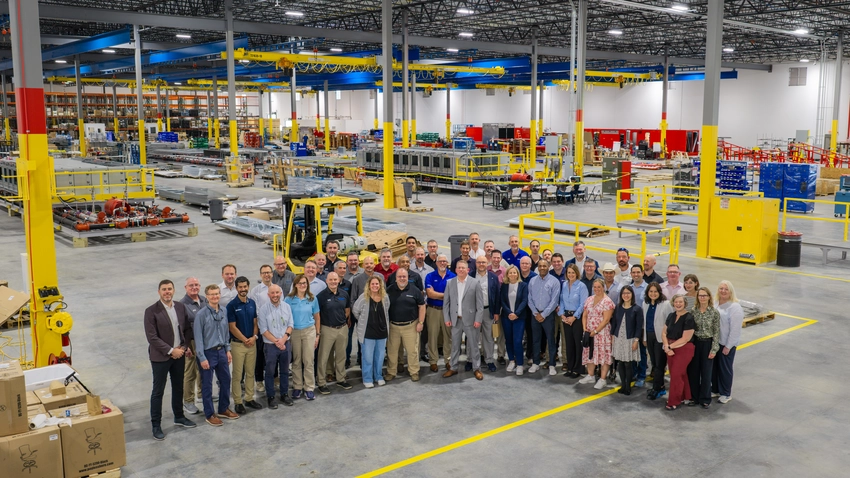
Children’s Hospital of Philadelphia uses open-source imaging AI to turn scans into detailed heart models in seconds, a task that once took a skilled researcher four hours. The models help care teams plan procedures for children whose anatomy may not fit standard devices.
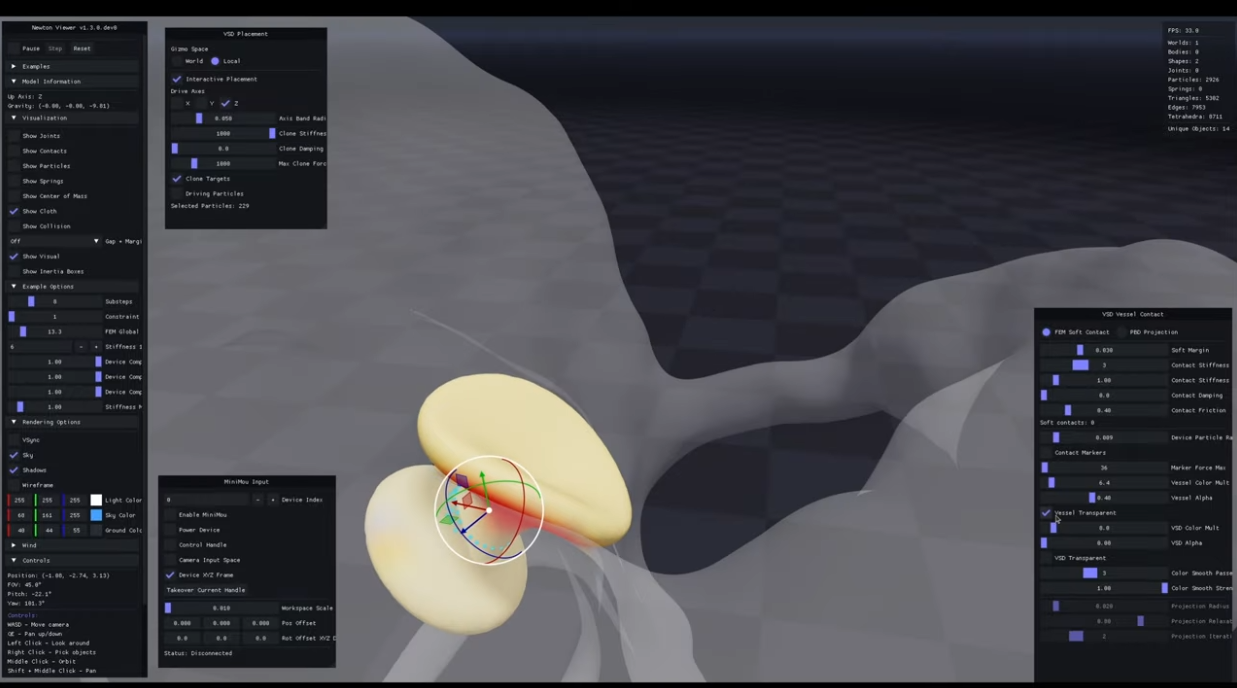 CHOP is developing simulations to test how devices fit inside a patient’s heart. Image: NVIDIA.
|
|
|
03
OpenAI · Sept. 16
A user who clicks an ad can choose to enter a clearly labeled, business-sponsored conversation, separate from the original ChatGPT chat. The U.S. test gives advertisers a way to answer follow-up questions within the product, alongside new tools for managing campaigns.
|
|
|
04
Menlo Ventures · Sept. 16
Menlo Ventures’ consumer study puts U.S. adult AI adoption at 64%, compared with 61% a year earlier. The report finds that 55% of AI users pay for the technology, suggesting that the business is growing through heavier use as well as new customers.
|
|
|
05
NVIDIA · Sept. 16
The new alliance, which includes Emerald AI, wants data centers to adjust electricity use when the grid is strained. Common standards could help utilities assess those promises as they plan for new demand, but the announcement does not establish savings for households.
|
|
|
AI Workflows | Thursday: New-opportunity identification
Astra can build a lead dashboard around the work you sell.
|
|
On September 15, Taber Extrusions opened a Russellville expansion expected to create 70 jobs. For someone selling employee-onboarding services, that is a company worth investigating. Whether it needs outside help remains an open question.
I have been using Astra to build lead-research dashboards. What interests me is how a business requirement becomes a useful search. Here is a public example readers can try.
With Astra in ChatGPT Work, the model directs the research; web tools retrieve the pages. Ask Sites to build the dashboard from the findings. You need an account with Astra and Sites available.
-
Define a match. For this onboarding consultant: Arkansas manufacturers with facility or expansion announcements published in the past 90 days that describe planned new jobs. The brief supplies the industry, geography, timing, and reason a prospect might need the service.
-
Translate that into search language. Ask Astra to search terms such as “plant expansion,” “new production line,” and “new jobs.” One query from this test: Arkansas manufacturing "plant expansion" "new jobs" 2026. Follow-up searches use the company names it finds.
-
Read and check the evidence. Have Astra open economic-development announcements, company websites, and careers pages. Require dates and locations alongside expected jobs. Check company identity and merge repeat announcements. This search also surfaced Taber Industries in New York, a different business that fails our criteria.
-
Make the selection inspectable. Request search terms, source links, and brief reasons for keeping or rejecting each company. Mark missing information as unknown. A hiring announcement shows a stated plan; the need for paid training still requires confirmation.
|
|
Public research sample · Checked September 16
| Company |
Evidence and next check |
| Taber Extrusions |
70 expected jobs; press online since June. Confirm the hiring timetable. |
| Eaton |
1,200 expected jobs; existing workforce training approach. Investigate whether outside support fits. |
| InnovAsian |
About 200 expected jobs; production planned for early 2028. Track the future timetable. |
Illustrative prospects from public announcements. Buying interest is unconfirmed; this sample does not cover the full market.
|
|
Give the agent this assignment
Research up to 10 prospects using these criteria and public sources. Show facts separately from possible training needs. Build a private dashboard with sources, dates, public business contact routes, missing information, and review status. Include the research log, filters, and spreadsheet export. Test the links and export. Return fewer matches if evidence is insufficient. Get my approval before contacting anyone or publishing.
|
|
|
If prospect research has made a small niche too costly to pursue, this is a way to test it. A business owner can adapt the criteria to the work their team sells.
Set a pilot bar: at least 80% of returned candidates must survive your fit review, and research plus review time must beat your usual process. Revise the search if either test fails.
|
|
|
|
NEW AI TOOL
Toki’s meeting-coordination feature reaches out to attendees and finds a time that works. The assistant also accepts voice notes, screenshots and written requests to organize your schedule, with support for Google Calendar, iCloud and Outlook.
For someone who repeatedly chases availability across several people, the useful feature is handling that exchange. Scheduling links remain available for simpler appointments, while the broader app manages reminders and competing calendar demands.
Source: Toki’s product overview
|
|
|
HEADLINES
The fuller read.
|
Work and business
Anthropic · Sept. 16
Users can move from a conversation into document creation, presentations and tasks that continue after a laptop closes. The rollout begins with Pro and Max subscribers over the coming weeks; Team and Free users follow later.
Anthropic · Sept. 15
Ready-made workflows cover leads, proposals and month-end work, with approval required by default before sending, posting or paying. A free workshop tour includes Bentonville, Arkansas, among its stops.
Salesforce · Sept. 15
AIforce lets employees work with customer records and business processes through interfaces including Claude and Slack, while retaining Salesforce permissions. The Claude integration is in beta, with 37 sales skills for tasks such as preparing for meetings.
Adecco Group · Sept. 15
The rollout spans more than 40 countries after pilots in Britain and France. Recruiters and sales staff will use AI for candidate histories, meeting preparation and steps in screening and onboarding.
Google · Sept. 15
Gemini 3.8 Live and its extended-thinking version are designed to handle visual context and multistep requests while maintaining a spoken exchange. The practical aim is an assistant that can work through a problem without making the user restart the conversation.
|
|
Consumers and commerce
OpenAI · Sept. 16
Select U.S. advertisers can test Sponsored Agents, which users choose to enter after clicking an ad. The same announcement adds campaign-management tools and connections with HubSpot and Shopify for businesses buying ChatGPT ads.
Menlo Ventures · Sept. 16
The report draws on a survey of 5,067 U.S. adults and puts daily AI use at 25%, up from 19% a year earlier. Menlo separately estimates global annual consumer AI spending at $40 billion.
TechCrunch · Sept. 16
The early-access rollout lets compatible agents operate connected devices and retrieve home-event information. It initially requires a U.S. Google Home Premium Advanced subscription and technical setup, so ordinary households may need help getting started.
Salesforce / Live Nation · Sept. 16
The Venue Agent answers questions about parking, bag rules, accessibility and opening times around the clock. The expansion follows a BottleRock festival pilot, bringing automated help to the practical questions fans ask before a show.
TechCrunch · Sept. 16
The early-access assistant can switch between Hindi and English within a conversation and connect to local services. The launch extends Amazon’s AI assistant to everyday tasks such as grocery orders, reservations and smart-home control in another major market.
|
|
Health and science
NVIDIA / Children’s Hospital of Philadelphia · Sept. 15
The Philadelphia hospital uses models made from existing scans to help plan care around each child’s anatomy. Researchers are also developing simulations of how implanted devices will fit and behave, with real-time clinical simulation still a longer-term goal.
Novo Nordisk · Sept. 16
The collaboration will evaluate AI in specific research workflows, including scientific reasoning and software engineering. It is a test of how assistants can support scientists; the announcement reports no new approved treatment or proven clinical benefit.
2 Minute Medicine / research review · Sept. 16
In a two-month randomized trial involving 238 outpatient physicians, Nabla reduced time spent on notes by 9.5% relative to usual care, while DAX showed no significant reduction. Documentation errors persisted, leaving review work for clinicians.
arXiv / preprint · Sept. 15
In simulated deployment, models that had seen a patient’s history during training could become less sensitive to newly developing conditions. The preprint identifies a risk for evaluating medical AI on returning patients, rather than documenting missed diagnoses in actual care.
NVIDIA / University of Manchester · Sept. 15
The team trained a model on a supercomputer that can then run on a compact desktop system. Faster forecasts could support local health warnings and test pollution-reduction policies, though those uses remain goals for the research.
|
|
Trust, safety and public policy
The Verge · Sept. 16
The reporting traces a network of 28 apps that use fabricated romantic profiles and charge users to keep chatting. Human gig workers can help the personas appear authentic, making a brief video interaction an unreliable test of who is behind an account.
TechCrunch · Sept. 15
At Dreamforce, NVIDIA’s chief argued that engineering, market pressure and existing legal protections can address AI risks. His remarks put a major supplier’s opposition to additional AI regulation into the public debate; they announce no change in law.
Mustafa Suleyman / essay · Sept. 16
Suleyman argues that training AI around ideas of its own moral status could complicate human control of the technology. His essay calls for separating research into consciousness from model training, and represents a contested position in the safety debate.
Google DeepMind · Sept. 16
The initiative brings together essays and research on the economic and social consequences of increasingly capable AI. Its contributors’ arguments are intended to invite debate and do not necessarily represent Google’s corporate position.
NVIDIA · Sept. 16
The AI Energy Management Alliance is developing shared approaches to flexible electricity use, including shifting computing work and using storage. Its grid and cost benefits are proposed outcomes, not measured savings from an operating national program.
|
|
Public services, skills and transport
Salesforce / TSA · Sept. 14
Ace handles questions about packing and airport checkpoints, with complex requests going to people. Salesforce reports about 100,000 monthly conversations and says 96% of routine inquiries are resolved without escalation; the assistant does not make airport screening decisions.
Salesforce · Sept. 14
The package includes $18 million directly for public school districts in San Francisco, Oakland, New York, Chicago and Indianapolis. The company frames the funding around preparing schools and educators for an economy increasingly shaped by AI.
Salesforce · Sept. 14
The 12-week SkillBridge program combines practical work, mentorship and certification support. It gives transitioning military personnel a route to experience with AI-related technology jobs, rather than relying on classroom instruction alone.
TechCrunch · Sept. 16
The proposed merger values the company at $1.4 billion and could provide more than $300 million for expansion and development. May plans to use the funding to advance service without safety drivers; the transaction still has to close.
TechCrunch · Sept. 14
The initial service uses a limited fleet of Ojai minivans within a defined operating area. Access is rolling out by invitation, making this a gradual opening rather than immediate availability to everyone visiting the city.
|
|
|
mAIn Street gives nontechnical readers useful AI news they can put to work.
mAIn Street #313 · Thursday, September 17, 2026
|
|
|
|