Claude raises usage limits, Handshake opens free AI training and Microsoft disrupts an email-fraud operation.
 |
| Wednesday, September 23, 2026 · Edition 317 |
Claude users get more room to work, job seekers get a free place to practice, and new Macs put more AI processing on the desktop. Wednesday’s edition also follows an email-fraud takedown, California’s effort to protect utility customers and the choices schools face as AI enters everyday work. |
|
TODAY’S THROUGHLINE
Wider access to AI brings more opportunities to learn and more responsibility for its consequences.
|
|
|
TOP 5
Five stories worth your time.
|
|
01
Anthropic / announcement · Sept. 22
The release raises five-hour usage limits for Pro, Max and Team subscribers. Anthropic says the model writes more clearly, generates output faster and costs 40% less on typical API workloads than Opus 5. That cost claim concerns metered model use, not a cut to subscription prices. For everyday users, the immediate benefit is more room to work before hitting a limit.
|
|
|
02
CyberScoop · Sept. 22
EvilTokens used AI to search stolen inboxes for people authorized to move money and relationships criminals could exploit. Microsoft linked the service to more than 12,000 compromised inboxes across over 10,000 organizations. Court action helped the company seize 50 sites and disable another 175 domains.
|
|
|
03
Handshake / PR Newswire release · Sept. 22
AI Skills Studio offers guided assignments lasting about 10 to 45 minutes. Job seekers make usable projects, such as dashboards and workflows, with help from an AI instructor. The training is free through Handshake’s website and app, connecting practice with evidence candidates can show prospective employers.
|
|
|
04
Apple / announcement · Sept. 22
The Mac mini starts at $899 and Mac Studio at $2,499. Apple emphasizes running AI on the desktop, alongside ordinary office and creative work. That gives buyers another reason to compare memory and software requirements before choosing a machine.
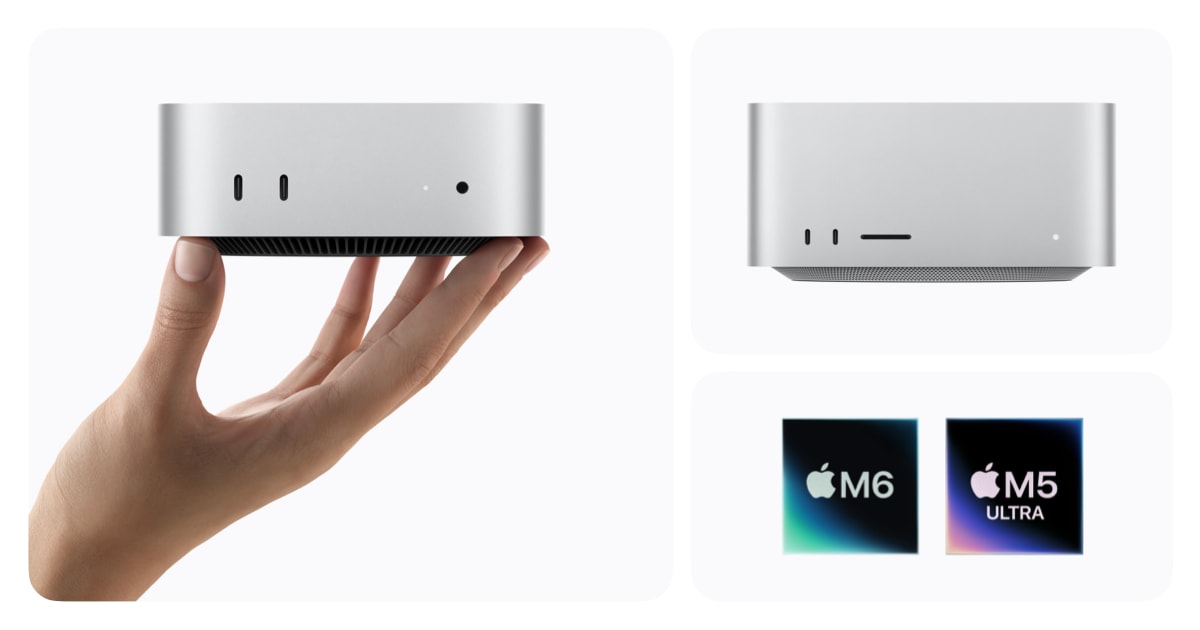 Mac mini and Mac Studio. Image: Apple.
|
|
|
05
The Verge · Sept. 21
Seven new laws aim to prevent households from absorbing the electricity and water costs of large data centers. The measures include a separate electricity rate category and requirements covering infrastructure upgrades. The practical question for residents is who pays when a major AI facility connects nearby.
|
|
|
AI Workflows | Wednesday: Problem and product prototyping
You discover AI’s place in your business by making and breaking things.
The evidence for a broad AI-driven jobs collapse remains incomplete. In its September 15 update, Yale’s Budget Lab still found no clear AI-related shift in the overall labor market. Meanwhile, a September Census working paper found weaker initial employment and earnings among graduates in the most AI-exposed college majors. Entry-level opportunities deserve particular attention. Neither finding settles what happens next.
What I can see much more clearly is how AI changes the work itself. You start using it for one task. Halfway through, you discover it’s lousy at that task. Or your instructions were vague. Or the useful part turns out to be something you hadn’t considered asking it to do.
That gets harder to anticipate as the tools change. Codex can build and test software; ChatGPT Work can produce working spreadsheets and Sites. Claude Cowork can carry out tasks across approved files and connected tools. A disappointing chatbot experience from a year ago tells you little about whether one of these systems could help with today’s bottleneck.
This is where prototyping earns its place. Build a small version you can actually use, then let the results challenge your assumptions.
Try it on one purchasing decision.
Suppose comparing supplier quotes eats up your afternoon. Your first instinct might be to ask AI which supplier to choose. That can go badly when the cheapest quote leaves out delivery or the system knows nothing about a vendor’s reliability.
Give Work or Cowork access to an approved sample folder through your company-approved account. Ask it to build a reusable comparison spreadsheet from the quotes, with source references, adjustable quantities and delivery costs. Missing terms should stay visibly unresolved. Have it check its calculations. Keep ordering and vendor contact subject to your approval. Access depends on your plan and company settings.
|
Give the prototype a pass-or-fail test.
Check it against a completed purchase, then try a fresh set of quotes. Include one awkward case, such as a missing delivery charge. Set a target: at least 20% less time, including your review, with no invented prices or missed stated requirements. If it fails, identify the cause, let the agent repair it, and retest.
|
You may discover that extracting terms saves time while choosing a supplier still needs your experience. That gives you a specific job to delegate and a reason to keep developing the tool. Persistent errors give you a reason to stop.
Managers should bring junior employees into these experiments. Let them investigate mistakes and explain the corrections. A successful prototype alone is a thin basis for a staffing decision.
Pick one recurring frustration this week. Build something small enough to test before Friday, and record what would make you keep it.
|
|
|
|
NEW AI TOOL
Voiskey combines voice typing with AI editing. It removes verbal stumbles, adjusts wording and formatting to the task, and learns preferred names and terminology. The company offers versions for Mac, Windows, iOS and Android.
Try dictating a follow-up email after a meeting: who agreed to do what, what remains unresolved and when you need a reply. Review the resulting draft for names, dates and commitments before sending. The useful test is whether speaking and checking takes less effort than typing the message yourself.
Source: Voiskey’s product details
|
|
|
THE DAILY ROUNDUP
Headlines
|
Work, business and everyday tools
Anthropic / announcement · Sept. 22
Anthropic also reports better resistance to malicious instructions and fewer actions outside assigned boundaries. Those are test results, not a guarantee that delegated work needs no review.
Apple / announcement · Sept. 22
The highest-memory Studio configuration arrives later, in October. Buyers planning local AI work should check which models their software supports.
xAI / announcement · Sept. 21
xAI says its update improves sustained work on documents and presentations while keeping the previous model’s pricing and speed. Its claims make a useful test case for users: compare a familiar assignment against the older version.
FinTech Global · Sept. 22
The app combines conversational AI with financial calculators and linked accounts for cash-flow and retirement planning. People joining during its beta can use it free until January 1, 2028, according to the company’s launch terms.
MindBridge / Business Wire release · Sept. 22
The company’s new risk-assessment product connects financial analysis with supporting evidence and audit planning. It also previewed tools for reviewing spending and the financial close, with people responsible for the resulting judgments.
The Guardian · Sept. 21
UK research finds chatbot dependence can delay help and frustrate customers.
|
|
Security, fraud and trust
CyberScoop · Sept. 22
The case gives finance teams another reason to verify payment changes through a known contact route.
The Verge · Sept. 22
A researcher found that malicious software already running on a Mac could redirect Muse’s transcription connection and exploit its permissions. Meta issued a fix. The reported attack required local code execution, rather than simply visiting a hostile website.
The Next Web · Sept. 22
Its Unit 42 service uses advanced models to probe authorized applications, cloud systems and other services, then helps teams repair weaknesses. The subscription moves testing beyond occasional exercises toward repeated checks as systems change.
Zapier / syndicated survey report · Sept. 22
Among 1,005 U.S. respondents at companies with at least 500 employees, 31% reported entering logins or API keys into AI tools. More than a third were unsure what information they were allowed to share.
Honorlock / Business Wire release · Sept. 22
The vendor says employers can verify candidates and review timestamped evidence of unauthorized assistance during interviews. Its announcement describes detection capabilities; employers still need a fair process for reviewing flags before rejecting an applicant.
Aembit / CyberNewswire release · Sept. 22
An integration with Okta’s Cross App Access lets administrators control which approved applications an agent can reach on a user’s behalf. It also helps identify the agent and person behind an action, making delegated access easier to trace.
|
|
Education, skills and healthcare
Handshake / PR Newswire release · Sept. 22
Learners can display completed work and skill badges on their profiles, giving employers something concrete to inspect.
WBUR · Sept. 22
A $1 million pilot supports teacher training as Massachusetts districts take different approaches to classroom AI. WBUR’s reporting shows how much students’ experience still depends on local policy and the guidance individual teachers receive.
Chalkbeat / syndicated reporting · Sept. 22
A review finds widespread state guidance but limited practical help for distinguishing legitimate assistance from misconduct. Teachers face the harder work of redesigning assignments and explaining what students may use, rather than relying on broad policy language.
HCCC / program details · Fall 2026 showcase
Its AI SPARK grants support classroom projects that ask students to examine AI critically. One history exercise checks simulated historical figures’ answers against primary sources, making verification part of the assignment rather than an afterthought.
Emory University · Sept. 22
A new five-year dual degree combines medical training with a master’s in robotics, including a year at Georgia Tech. The program aims to prepare physicians who can help design and evaluate technology used in patient care.
DexCare / announcement · Sept. 21
Mila’s AI handles calls, texts and chat for scheduling, preparation and follow-up. DexCare plans to connect those conversations with health systems’ appointment rules, insurance requirements and care instructions, addressing the administrative steps between seeking care and receiving it.
|
|
Policy and public life
The Verge · Sept. 21
The package also requires water-use disclosures and planning. Communities gain more information as they weigh proposed developments.
NDTV Profit, covering Reuters/Ipsos · Sept. 22
In a poll of 1,277 U.S. adults, 73% said companies had not done enough to prevent serious harm. The survey’s margin of error is three percentage points, and 55% viewed slowing AI development positively.
Maryland governor’s office · Sept. 22
Governor Wes Moore’s framework calls for potential safety-testing and reporting requirements, workforce training and clearer application of existing civil-rights laws. It also proposes protections for student-facing tools. The framework sets policy priorities; it does not enact every proposal.
The Verge · Sept. 22
The president also announced plans to call the technology “superintelligence” in government documents and said the Justice Department would watch for problems. The proposed name change does not establish that systems have reached a new technical capability.
Reuters / Internazionale · Sept. 22
DeepSeek and Moonshot are expected at Wednesday’s U.N. discussion alongside U.S. AI leaders, according to Reuters’ sources. The planned session concerns international security. The report says arrangements remain subject to change.
The Canadian Press / CityNews · Sept. 21
The province seeks to recover costs associated with the February attack, alleging that OpenAI failed to warn police about the shooter’s chatbot interactions. The California lawsuit’s claims are allegations, not findings that a court has established.
The Defense Post · Sept. 22
The new branch brings work on drones, robotics and AI across air, land and sea under a dedicated organization. Its creation shows the military treating these capabilities as a continuing operational responsibility.
|
|
|
mAIn Street gives nontechnical readers useful AI news they can put to work.
mAIn Street #317 · Wednesday, September 23, 2026
Reporting checked through September 22, 2026.
|
|
|
|