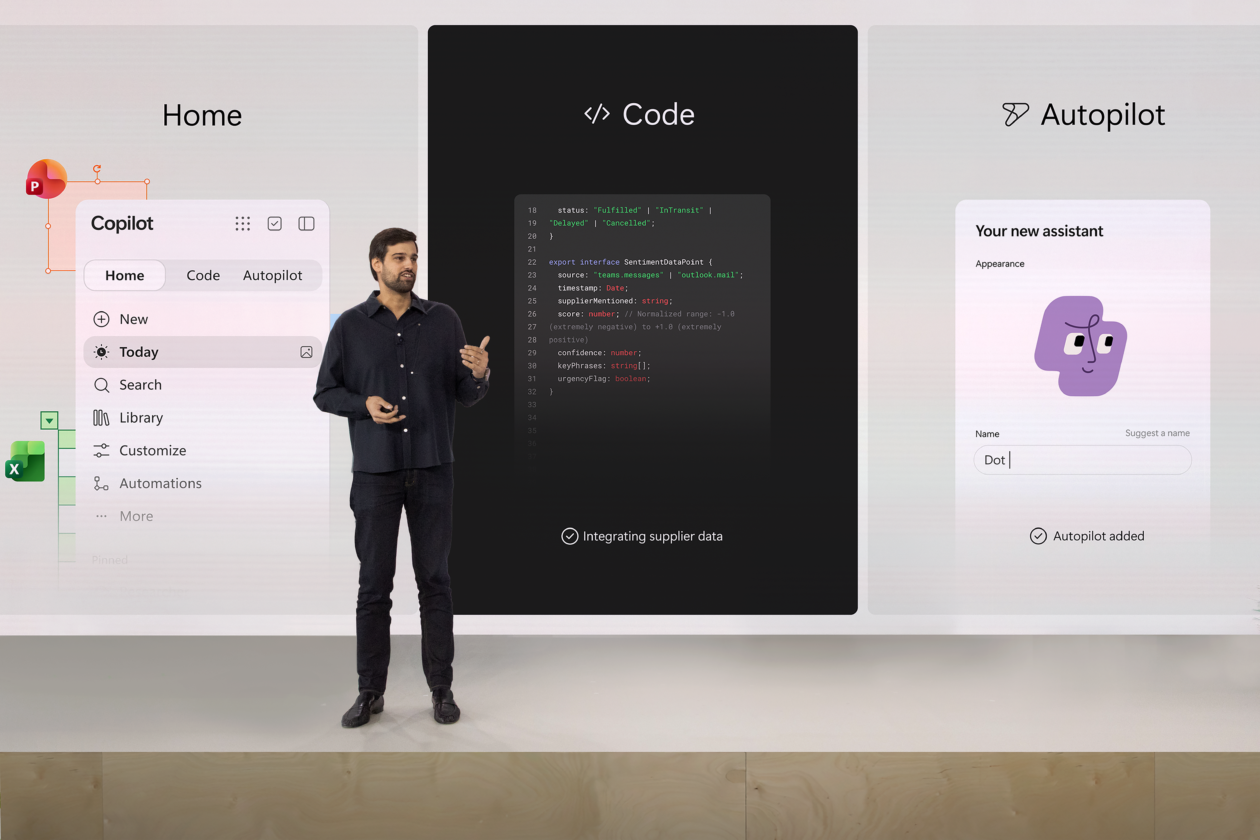
Meta’s enterprise push, Nvidia’s agent controls, Florida’s court request and Gemini’s move from Gems to skills.
 |
| Tuesday, September 29, 2026 · Edition 321 |
Good morning. Meta is building an enterprise AI business, Google is changing how saved instructions work, and Nvidia is putting controls around agents. Also inside: classroom experiments, accounting careers and new state rules taking effect this week. |
|
TODAY’S THROUGHLINE
AI is moving deeper into business operations, bringing decisions about access, oversight and evidence to more workplaces.
|
|
|
TOP 5
Five stories worth your time.
|
 Classroom AI is one of today’s five leading stories. Illustration: Julianna Brion for NPR. Read the reporting.
|
|
01
Nvidia / platform announcement · Sept. 28
Nvidia’s Open Agent Safety Platform combines software boundaries with a hardware watchdog design. The aim is to enforce limits outside the AI model itself, giving organizations a way to monitor actions and stop agents that exceed their permissions.
|
|
|
02
Meta / company announcement · Sept. 28
Meta is creating a business unit to bring its AI models, agents and developer tools to companies. MongoDB CEO CJ Desai will lead it, reporting to Mark Zuckerberg. The move puts Meta more directly into the market for workplace AI.
|
|
|
03
The Next Web / court filing report · Sept. 28
Florida’s attorney general wants a temporary injunction requiring independent safety safeguards before OpenAI develops new models. The filing also seeks to keep minors in Florida off ChatGPT. These are requests to a state court, with no ruling reported.
|
|
|
04
TechCrunch / Google product notice · Sept. 28 report
Google says it will automatically migrate Gems to skills starting November 17. Existing custom instructions will move with them, preserving work users have put into their assistants. The change was announced in Gemini and reported over the weekend.
|
|
|
05
NPR / KUOW · Sept. 28 reporting
New NPR reporting finds districts trying AI for teaching, feedback and emotional learning while struggling to define success. A Stanford review of more than 800 papers found limited evidence to guide schools, leaving educators and families to assess experiments with uneven support.
|
|
|
AI Workflows | Tuesday: Context and harness management
A client handoff should carry the decisions that made the current plan.
On September 23, Google added a way to reference a Gemini Notebook inside Docs. A draft can draw on that notebook’s sources and show inline citations. For a client project, that opens up a useful handoff: the next person can see the source behind a deadline or promise without reconstructing months of conversation.
Imagine you manage a website launch and will be away for three days. The approved schedule says Friday. The client asked for Wednesday in a meeting, but your team has not accepted that change. A rushed summary could turn the request into a commitment. A good handoff keeps both facts, their dates, and the person who must decide.
|
Context: The signed scope, approved schedule, meeting notes, and dated decision log in the client’s authorized Drive folder. |
| |
|
Harness: Rules for adding new sources, labeling approved versus pending changes, citing commitments, limiting access, and stopping before any client message or schedule change. |
| |
|
Result: A one-page handoff with the current commitment, open requests, owners, next actions, and links to the underlying records. |
Make one notebook for the client and give it only authorized project sources. Workspace Studio can add new Drive files as notebook sources when they enter the client folder; Drive-backed sources can sync later edits. Record the approval rule in the notebook’s instructions and in the handoff assignment. When ownership changes, @mention the notebook in Docs and have Gemini produce the cited handoff. This Docs feature requires an eligible plan, including Workspace Business Standard or Plus, with the relevant settings enabled.
|
Assignment to copy after selecting the notebook: “Draft a one-page internal handoff. State the latest approved deliverable and date, with a citation for each commitment. List newer client requests separately until an authorized person approves them. Name the owner, next action, and any missing decision. Check the signed scope and dated decision log against the meeting notes; flag conflicts you cannot resolve from sources. Do not message the client or edit the project schedule. I will check the citations and approve sharing.” |
After you check the citations and approve sharing, give the handoff to the incoming owner. Ask them to find the approved deadline and the unresolved request. If either answer lacks a source, fix the notebook or intake rule before the next handoff. Managers can use that same two-question check across client teams.
|
|
|
AI TOOL SPOTLIGHT
Databox’s AI Analyst works with connected business data to answer questions, build metrics and produce reports. Its connectors can add the context behind your numbers, while saved metric definitions help keep recurring analysis consistent.
Try one question you already know how to check: which campaign brought in the most qualified leads last month? Connect the approved records, define “qualified,” and compare the answer with your existing report before scheduling it. The value depends on the data, definitions and access you provide.
Databox / features and trial details
|
|
|
THE DAILY ROUNDUP
Headlines
|
Business and working life
Meta / company announcement · Sept. 28
Meta Enterprise Platform will turn products including Muse, its business agent and developer tools into services for companies. Desai joins from MongoDB; the announcement establishes a new business unit, with the broader product offering still taking shape.
TechCrunch / company profile · Sept. 28
The talent marketplace connects U.S. companies with finance professionals worldwide for ongoing roles. Its hiring pitch combines accounting knowledge with the ability to use AI, spot mistakes and exercise judgment as routine work becomes easier to automate.
Bank of America / product announcement · Sept. 28
Payments Insights joins the CashPro analytics suite for corporate and commercial clients’ U.S. accounts. It uses payment patterns and peer comparisons to help treasury teams examine payment efficiency, cross-border transactions and working capital.
TechCrunch / funding report · Sept. 28
The company’s software reads insurance documents and helps brokers compare coverage and prepare applications. Its new funding comes four months after its previous round, backing a business built around reducing the document work behind commercial insurance.
Lofty / announcement via GlobeNewswire · Sept. 28
The new connection can give approved assistants access to brokerage records and authorized actions. A firm could use it to find promising leads that have gone without follow-up, using its existing business data and instructions.
|
|
Tools and control
Nvidia / platform announcement · Sept. 28
OpenShell can record actions and control an agent’s access to systems. Nvidia also introduced Sentry, a separate hardware watchdog design intended to isolate agents that cross their boundaries; the watchdog is a reference design, while OpenShell is broadly available.
TechCrunch / Google product notice · Sept. 28 report
Gems remain usable before the move. After migration, users will select skills with a forward slash in a task thread, changing how they call up saved instructions.
Lenovo / product announcement · Sept. 28
The Googlebook 15 is scheduled to arrive October 4, starting at $1,099.99. Its features include contextual actions through the pointer and dictation that removes filler words and adds formatting; availability varies by market and language.
TechCrunch / funding report · Sept. 28
Its voice systems can examine calls for scams, synthetic voices and possible policy violations. The company is extending technology developed for online voice moderation into business calls, where a transcript alone can miss important context.
TechCrunch / company profile · Sept. 28
The startup wants handset makers to embed small detection models into phones so suspicious calls can be checked on the device. Its proposed protection targets impersonation scams; it is a technology licensing effort rather than a newly available consumer app.
CSO / Microsoft security findings · Sept. 28 report; Sept. 25 disclosure
Stolen application credentials let attackers delete Azure resources in minutes. Microsoft linked the activity to Jadepuffer; the evidence shows coordinated automation, but does not establish that AI directed every action. Deleting an exposed password from a public post also left it visible in the edit history.
|
|
Rules and public decisions
The Next Web / court filing report · Sept. 28
The motion belongs to Florida’s existing lawsuit. OpenAI says it favors industry-wide rules instead of restrictions aimed at one company; the requested injunction is not a court order.
Reuters / Yahoo Finance · Sept. 28
House Speaker Mike Johnson says the White House meeting will weigh innovation against oversight. His comments oppose a development moratorium while calling for more transparency; the meeting’s outcome was still pending at this edition’s reporting cutoff.
CT Mirror / effective-date guide · Sept. 28
New AI subscription disclosures and frontier-model whistleblower protections take effect Thursday. Employment and companion-chatbot provisions have separate, later deadlines, making the effective date of each requirement an important part of the rollout.
Reuters / The Straits Times · Sept. 28
Both companies cite short notice for the Senate committee appearance sought after the Medicare incident. OpenAI says its chief strategy officer will attend a separate parliamentary AI hearing on October 6, keeping the two proceedings distinct.
Axios / AllSides · Sept. 28
The American Infrastructure Alliance seeks local standards to avert construction moratoriums.
|
|
Schools, communities and culture
NPR / KUOW · Sept. 28 reporting
NPR’s reporting contrasts districts expanding experiments with others holding back. In Dayton, an emotional-learning chatbot asks students for advice and grades their replies; even the pilot’s evaluator says measuring success remains difficult.
Lenfest Institute and OpenAI / joint announcement · Sept. 28
OpenAI is committing $5 million plus up to $5 million in software credits and engineering support. The next phase will add news organizations to a program whose fellows have built archive-search, translation and reporting tools alongside newsroom staff.
University of Pittsburgh / grant announcement · Sept. 28
A $1.62 million Appalachian Regional Commission award supports laser-processing training for displaced coal workers and fiber-optic sensing training for electricians. The latter includes monitoring AI data centers and power systems; the project aims to train at least 320 people over three years.
NHL / partnership announcement · Sept. 28
The league and its 32 clubs will use Adobe tools to produce and personalize content across audiences and languages. Fan-facing creative experiences are also planned, but those are future offerings rather than tools supporters can use immediately.
|
|
Health and research
Investing.com / company presentation report · Sept. 28
The company says the labs are part of its effort to speed research and development. It also reports that AI or computational work informed 40% of pipeline decisions over a recent three-quarter period; that measures involvement in decisions, not successful new treatments.
IDIBELL / research release via Medical Xpress · Sept. 28
ChromAgeNet examines the organization of DNA in microscope images and could help screen potential interventions. The study’s treatment experiments showed changes in cell appearance, without demonstrating restored cell function or a treatment for aging in people.
Northeastern University / researcher interview · Sept. 28
Their peer-reviewed analysis describes risks including dependency and reinforcement of harmful beliefs. In a new university interview, the researchers argue for more rigorous evaluation; the paper does not establish how often these harms occur across all chatbot users.
Purdue University / research report · Sept. 28
Interviews with 26 researchers and program managers show how automation projects break expertise into smaller tasks and standardize methods and data. The analysis examines changes in scientific practice without assuming that fully autonomous science will succeed.
Chief Healthcare Executive / interview · Sept. 28 publication
In a newly published interview, Joint Commission leaders describe a role for AI in preventing handoff errors. They emphasize existing governance principles, including patient transparency, incident reporting and repeated evaluation as hospitals put the technology to work.
|
|
|
mAIn Street gives nontechnical readers useful AI news they can put to work.
mAIn Street #321 · Tuesday, September 29, 2026
Reporting checked through September 28, 2026.
|
|
|
|