 |
| THURSDAY, NOVEMBER 5, 2026 · EDITION #347 |
|
START HERE
Find useful work that finally fits the budget
Today’s 25 stories cover new image tools, shopping assistants, website controls and the practical limits of agent adoption. The Thursday workflow tests a small opportunity: visual help guides for customer questions that have waited too long for an explanation.
In the tool spotlight, Floot Payments offers a way to test an app’s checkout before taking real money.
|
|
|
01 · TOP FIVE
November 4, 2026
OpenAI’s Images 2.6 update aims to keep more of an image intact when you ask for a change. It also introduces GIF creation, which is rolling out. For someone making instructions, product visuals or a series of related graphics, consistency matters: changing one detail should not require repairing everything around it.
A useful first test is a small set of approved images with one requested change in each. Check lettering, product details and anything the system should have preserved. A convincing picture can still contain a misleading instruction. The release supplies a practical reason to revisit visual work that previously took too many rounds of correction.
Read the source
|
|
|
02 · TOP FIVE
November 4, 2026
Amazon’s new Shop Direct Merchant Workspace lets eligible merchants manage the product information used to help shoppers discover items sold on their own websites. The U.S. program is free for eligible merchants. Businesses retain responsibility for fulfillment.
For a smaller retailer, the useful question is whether its catalog is accurate enough to be found and understood by shopping assistants. Prices, availability and product descriptions need attention before another discovery channel can help. Check the program’s eligibility and feed requirements before treating this as a sales opportunity for your store.
Read the source
|
|
|
03 · TOP FIVE
November 4, 2026
Cloudflare is adding visibility and controls for personal AI agents that visit websites on someone’s behalf. Site operators can distinguish agents, allow or block them, and restrict access to particular pages. Account-abuse protections are in early access.
Businesses may want an assistant to read a product page while keeping it away from sensitive account actions. These controls make that distinction more practical. Start by identifying which visits help customers and which actions require a person, then review agent traffic before applying broad restrictions. Availability differs across the announced features.
Read the source
|
|
|
04 · TOP FIVE
November 4, 2026
MyHeritage’s GAIA agent helps people work through genealogy questions inside the service. The launch is in English, with limited usage allowances for subscribers. Proposed changes to a family tree require human approval.
This is an everyday example of an assistant working within a specialized collection of records and tools. The person still has to decide whether a possible match is actually the same relative. Treat dates, relationships and suggested connections as research to verify, especially when several people share a name. The approval step matters because an attractive guess can spread through a family tree.
Read the source
|
|
|
05 · TOP FIVE
November 4, 2026
Uber’s earnings-call discussion put some numbers behind the idea of AI agents booking on our behalf. During Halloween week, it reported about four rides and 500 Eats orders through agents, against roughly 320 million trips overall in that period.
Those figures describe one week, not a quarter, and do not predict how quickly use will grow. They do give businesses a useful reality check when planning for automated customers. Keep existing customer journeys working well while testing the specific places an assistant can already help, such as finding information or preparing an order.
Read the source
|
|
|
AI WORKFLOWS | THURSDAY: NEW-OPPORTUNITY IDENTIFICATION
AI can give overlooked customer questions their own visual help guides
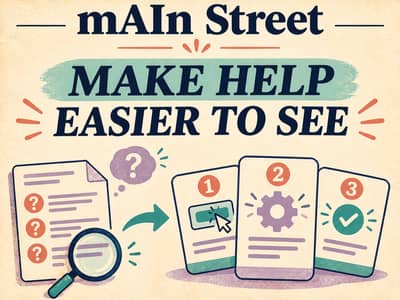 OpenAI’s Images 2.6 announcement describes more consistent image editing and a rollout of GIF creation. That gives support teams a reason to revisit a familiar pile of unfinished work: useful explanations that never justified the time required to illustrate them.
A question may come up only a few times a month. Answering it individually is manageable, so nobody makes the guide. Across dozens of questions, though, the work accumulates. Thursday’s skill is spotting an opportunity whose economics have changed. Lower production effort can make a small, neglected need worth serving.
Suppose you support customers using a booking tool. People occasionally struggle to change the length of an appointment. You know the answer and can recognize a correct demonstration. An illustrated guide might save them a call, but recording and maintaining a polished tutorial has always slipped behind other work.
Give the agent a bounded research job. In your approved work account, let it retrieve recent support questions and current help material through the connections your organization permits. Use read-only access and the smallest relevant set of records. Have it group low-volume questions that require a visual explanation, estimate how often they recur and link each candidate to its source. Exclude private customer details from anything intended for a guide. If your approved product cannot retrieve those records, use a company-approved, redacted export as a fallback.
Choose one need worth a small test. The agent can rank candidates; you select the question and confirm the correct procedure. Pick a low-risk action with a stable interface. Account recovery, medical instructions, payment changes and safety-critical procedures belong outside this first experiment. The opportunity should be clear enough to express in one sentence: who gets help, what they can finish and which repeated support effort the guide might remove.
Have it build the smallest useful explanation. Ask for a short storyboard and a visual card based on the current approved instructions. Use accurate screenshots when button names or positions matter. An image generator can help illustrate the explanation, but someone familiar with the product must check every depicted control and step. Try a short GIF only if the feature is available in your account and movement makes the task easier to understand. One clear still image may be sufficient.
Test the guide before publishing it. Ask five colleagues unfamiliar with the task to follow it in a safe test account. Record whether they finish correctly without help, where they hesitate and how long production and review took. Set your budget before starting, such as an hour for a first guide. Continue only if at least four of five testers finish correctly, no misleading step remains, and the expected support time saved justifies maintaining it. Revise or stop when the test fails.
An assignment you can give the agent: “Using only our approved support records and current help pages, find five overlooked questions that could benefit from a visual guide. Keep access read-only. Link your evidence, remove personal details and explain the likely benefit and maintenance burden. Wait for my choice. Then prepare a storyboard, a draft visual guide and a checklist comparing every step with the source instructions. Do not change records, contact customers or publish. Flag anything you cannot verify.”
A manager can make room for one such test each month and ask the team to track the work it actually removes. Include maintenance in that calculation: a guide that quietly goes stale can create more questions than it answers.
Choose one question your team keeps answering by hand. Give the agent a narrow source boundary and ask it to show whether a visual explanation would earn its keep.
|
|
|
|
06 · MORE HEADLINES
November 4, 2026
Conductor says its cloud service will become read-only on November 13 and cloud data will be deleted on November 20. A local product is planned for early 2027. Current users should check what they need to export and which jobs depend on the service before those dates; a future local release does not preserve today’s cloud workspace.
Read the source
|
|
|
07 · MORE HEADLINES
November 5, 2026
GPT-6 Cyber is being offered through vetted access in OpenAI’s Daybreak program. OpenAI rates the model at a critical cybersecurity capability level. The practical story is how powerful security tools are distributed and supervised. This is restricted access, not a cybersecurity feature automatically available in ordinary ChatGPT accounts.
Read the source
|
|
|
08 · MORE HEADLINES
November 5, 2026
Salesforce’s Coworker update adds connections, conversation history and reusable skills, with a stated $50 monthly price. Teams and device apps are planned for November; scheduling is planned for December. Separate the features available now from the roadmap when deciding whether it can take over a recurring task.
Read the source
|
|
|
09 · MORE HEADLINES
November 4, 2026
Go1’s partnership with OpenAI expands distribution of OpenAI Academy learning material through its workplace-learning offering. For employers already using Go1, it could make AI education easier to fit into existing training. Course access is a starting point; employees still need a work task on which to practice and a person who can judge the result.
Read the source
|
|
|
10 · MORE HEADLINES
November 3, 2026
Check Point’s Haiou investigation describes third-party jailbreak bundles that add promotional instructions and steer users toward a gateway. The warning applies to material people import into their AI setup: a shared configuration can change behavior in ways its advertised purpose does not explain. Inspect its source and instructions before adding it to a work account.
Read the source
|
|
|
11 · MORE HEADLINES
November 4, 2026
Render Sandboxes entered public beta as temporary environments for running code, including work produced by AI agents. The service supports idle suspension and network limits. Developers can use that separation to test code away from production resources, but still need to control credentials, access and the consequences of anything the code can reach.
Read the source
|
|
|
12 · MORE HEADLINES
November 4, 2026
In Talkdesk’s survey of 1,048 U.S. adults planning online holiday purchases, 15% would let an agent spend using their payment details with a review step; 10% would permit it without review. For retailers, helping shoppers find a suitable product may have wider appeal than asking them to delegate checkout. The separate retailer survey covered firms already using AI.
Read the source
|
|
|
13 · MORE HEADLINES
November 4, 2026
Okta reports that roughly four in five surveyed organizations are behind their intended pace for customer-facing AI, while only 6% of surveyed consumers want full autonomy. The research concerns this particular category of AI deployment, not every business project. Limited permissions, clear approval steps and ways to undo an action are sensible questions to ask of a customer-facing agent.
Read the source
|
|
|
14 · MORE HEADLINES
November 4, 2026
Among 400 U.S. and U.K. security decision-makers at companies with more than 500 employees, 47% reported sensitive-data exposure through AI tools. Of those reporting an incident, 77% said an approved tool was involved. This vendor-sponsored, self-reported research does not measure small-business prevalence. It does point to a practical training need: staff must understand which information they may share even in an approved product.
Read the source
|
|
|
15 · MORE HEADLINES
November 5, 2026
Deutsche Bank’s new academy covers prompting, responsible use and agents, with learning tailored to employees’ roles and experience. About 3,500 employees have access now, with expansion to more than 20,000 planned. Germany’s rollout is expected in the first half of 2027 after employee consultation. The approach offers a useful example of fitting AI training to the work people actually do.
Read the source
|
|
|
16 · MORE HEADLINES
November 4, 2026
Google Research’s Agile Deliberation framework uses borderline images to help people clarify subjective categories before training a classifier. Its evaluation included 18 live sessions. For teams automating judgments about brand fit or appropriateness, the lesson is practical: disagreements over the definition need attention before automation. This is research with open-source code, not a new Gemini app feature.
Read the source
|
|
|
17 · MORE HEADLINES
November 3–4, 2026
Snowflake’s announcements combine shared business definitions with controls over AI use. Cost governance and observability are generally available; tool-call governance is in public preview, and Business Ontology is described as coming to public preview soon. Buyers should check each feature’s availability separately. An employee’s permission to read a record should not automatically become unrestricted authority for an agent to act on it.
Read the source
|
|
|
18 · MORE HEADLINES
November 4, 2026
Confluent introduced its Streamhouse architecture and made Lightning Tables generally available on AWS. The read-only serving layer supports low-latency queries against continuously updated data. This is enterprise infrastructure, with performance claims based on internal tests. The broader operating question is simple: how old is the information an agent uses when it recommends an action?
Read the source
|
|
|
19 · MORE HEADLINES
November 4, 2026
Tencent introduced Hy4 with image understanding, chart reasoning and computer-use capabilities. It said model weights and system cards would follow in the coming days, so the announcement should not be read as confirmation that downloadable files are already available. Its performance claims are company-reported. Organizations considering the model will need to examine the actual release and deployment terms.
Read the source
|
|
|
20 · MORE HEADLINES
November 4, 2026
Agility Robotics completed its combination with Churchill Capital Corp XI, with trading expected to begin November 5. The Digit robot already has commercial deployments, with additional facilities and pilots planned. Distinguish current operation from future orders and pilots when judging progress. The event brings greater financial scrutiny to a company trying to make humanoid robots useful in industrial work.
Read the source
|
|
|
21 · MORE HEADLINES
November 3, 2026
Vercel Security Review is in public beta for Pro and Enterprise teams. It checks pushes to connected GitHub repositories and can propose fixes through reviewable pull requests. Reviews are free until November 10; agent-generated fixes are billed. Source-code review does not replace penetration testing or establish that an application is secure, and nothing merges until approved.
Read the source
|
|
|
22 · MORE HEADLINES
November 3, 2026
Endeavor 1.1 supports image inputs and an option for inference on GPUs in the European Union. Flower offers managed, private-cloud and on-premises deployment, along with inspectable reasoning traces. These are useful distinctions for organizations with location and control requirements. The accompanying benchmark comparisons come from Flower and should not be treated as independent rankings.
Read the source
|
|
|
23 · MORE HEADLINES
November 3; details updated November 5, 2026
Nexus Mods is introducing more detailed AI disclosures and explicit permissions for AI use and forks. New uploads must fill the updated fields immediately; a grace period for new requirements on existing content runs to January 2. Default permissions ask creators for approval, while valid copyleft licenses are respected. AI content remains permitted under the disclosure and reuse rules.
Read the source
|
|
|
24 · MORE HEADLINES
November 2, 2026
HCLTech’s new mainframe service combines specialized agents, conversational assistance and monitoring under human oversight. It targets system administration and operational work around existing mission-critical systems. The announcement does not establish independently measured gains, but offers an example of AI being applied to infrastructure companies already depend on.
Read the source
|
|
|
25 · MORE HEADLINES
November 4, 2026
The Modern Data Company introduced Dex for DataOS customers, with answers that expose the business definitions and underlying sources used. DataOS applies access controls when queries run. The company says Dex identifies questions the available data cannot support. Buyers should test that behavior with known gaps and ambiguous questions; the claim alone does not prove that unsupported answers have been eliminated.
Read the source
|
|
mAIn Street · Aric Mitchell
Research dated November 5, 2026.
Availability and prices can change. Product descriptions are based on announcements and documentation, not firsthand tests. |