 |
| FRIDAY, NOVEMBER 6, 2026 · EDITION #348 |
|
START HERE
Learn to check the answer
Today’s 25 stories include longer AI videos, apps built and hosted by an agent, and read-only financial analysis. The Friday workflow teaches a practical skill: checking an AI-built comparison against the original vendor quotes.
In the tool spotlight, Rerun offers self-hosted AI coworkers with memory and scheduled tasks. Start with a low-risk trial before giving an agent access to real business work.
|
|
|
01 · TOP FIVE
November 5, 2026
Google’s Gemini Omni 1.2 Flash raises native video length from 10 to 15 seconds and lowers 720p generation pricing by 30%, to seven cents per second. Users can revise an existing clip through follow-up instructions instead of regenerating it from scratch. Google also claims better consistency for faces, clothing, packaging and brand colors when supplied with reference images. That makes the update relevant to product demonstrations and short social ads, although the company acknowledges remaining problems with fast sports action, rapid script changes and complex physics. Outputs carry SynthID watermarks, and higher-resolution upscaling is available after a lower-resolution draft. The API is generally available; the Gemini app rollout starts with AI Ultra.
For a small business, a useful test is one short demonstration built from approved product images. Check the product shape, labels and movement before sharing it. Try changing one detail in a follow-up instruction to see whether the rest of the clip remains stable. Per-second generation prices are only part of the production cost when several attempts are needed, so measure the cost of an acceptable finished clip.
Read the source
|
|
|
02 · TOP FIVE
November 5, 2026
Cursor can now take a description of a work tool through to a live, shareable app. Its cloud agent builds the web application, provisions a Postgres database when needed, sets up Cursor sign-in and supplies hosting. The useful change for an operations or sales team is that a prototype no longer has to stop on somebody’s laptop. Cursor cites registration tools, onboarding experiences and sales dashboards among its own uses. Publishing requires explicit approval after automated and AI security checks pass. Team administrators can inspect apps and secrets, impose review rules and unpublish apps. Those checks should not be described as a security guarantee. It is available on paid plans with cloud agents enabled.
For a first trial, choose an internal tool with a narrow purpose and use sample data. Check who can sign in, what each person can see and whether a failed action can be reversed. A registration form or simple request tracker is easier to evaluate than a system making decisions about customers. The saved deployment work does not remove the need for an owner who understands the process.
Read the source
|
|
|
03 · TOP FIVE
November 5, 2026
Claude’s new Personal Finance area connects bank and card accounts through Plaid so people can ask about spending, balances, bills and fees in ordinary language. Anthropic says it can spot duplicate charges, explain interest costs and build adjustable charts or bill calendars. The boundary is important: access is read-only, and Claude cannot move, manage or invest the money. It can receive up to two years of transactions from connected accounts. Conversations inside the dedicated finance area are excluded from model training; ordinary privacy settings apply elsewhere. Anthropic warns that answers can be wrong and recommends checking consequential figures against the bank’s records. The beta is rolling out to U.S. Pro, Max and Ultra subscribers.
Start with a question you can independently check, such as whether a recurring charge increased or appeared twice. Compare the answer with the original transaction record before acting. Connecting a financial account also deserves a deliberate privacy decision: review which accounts are included, where the data appears and how to disconnect them. A useful explanation can help prepare a decision without making that decision for you.
Read the source
|
|
|
04 · TOP FIVE
November 5, 2026
Federal prosecutors in New York have charged three people over an alleged scheme that used AI-generated voices or images to impersonate company executives and lawyers. Prosecutors say employees were approached about supposedly confidential transactions, then directed to fake lawyers who instructed them to wire money. The alleged losses exceed $129 million and span businesses including hospitals, financial firms and a pet-food company. The defendants were arrested in Spain and the United Kingdom earlier this year; U.S. extradition requests are pending. All remain presumed innocent.
For business owners, the useful warning is the combination of a familiar voice, claimed authority and a request for secrecy. A realistic call is no longer enough to establish who is speaking. A sensible response is to verify unusual payment requests through an independently known number, require a second approver and never allow an urgent or confidential request to bypass payment controls.
Read the source
|
|
|
05 · TOP FIVE
November 5, 2026
METR’s unusually detailed examination of Anthropic’s internal research finds that its models are improving on well-defined tasks at roughly twice their earlier pace. The independent evaluation group studied internal data and interviewed staff between August and October. Benchmark progress since October 2025 ran at an estimated 1.9 times the preceding rate. METR believes extensive AI use accounts for most of the acceleration, and says faster growth in training compute does not explain it. Staff described the gains as coming mainly from AI assistance, rather than fully autonomous researchers.
Those findings come with large caveats. METR says the actual acceleration could plausibly be closer to 1.3 or three times, and cautions against treating benchmark gains as equivalent to progress on every real-world task. Anthropic also redacted much of the evidence that most influenced the assessment. The practical lesson is that AI may already be speeding its own development, but the public still cannot independently inspect much of the supporting evidence. This is evidence of acceleration, not proof of unrestricted recursive self-improvement.
Read the source
|
|
|
AI WORKFLOWS | FRIDAY: RAPID SKILL ACQUISITION
You can learn to check an AI agent’s work by comparing two vendor quotes.
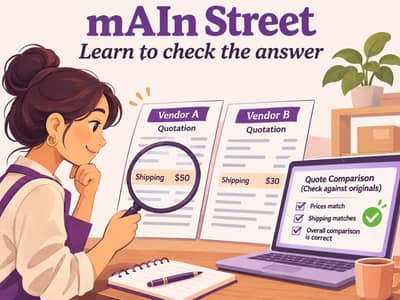
Perplexity introduced Teammates this week, agents that coordinate ongoing projects and bring results back for review. That last step creates a practical skill to learn: deciding whether a finished-looking answer deserves your trust.
Start with a job you understand. Suppose you manage an office and need to compare two copier-service quotes. Your learning goal is to check whether an AI-built comparison treats both offers fairly. The useful result is a spreadsheet with a defensible annual cost and a list of unanswered questions.
Set the rules before the agent calculates.
Choose the expected monthly page volume, contract period and service requirements yourself. Write down which charges you expect to matter before viewing the agent’s answer. This preserves your own reasoning and gives you something to test.
Use a company-approved agent with access to the quote folder. Claude Cowork can build Excel files with working formulas; its connectors can retrieve approved files. Cowork requires a paid plan, and workplace settings may restrict access. ChatGPT Work also supports connected apps and spreadsheet creation on eligible paid plans. If your storage service has no approved connection, use a sanitized file upload as the fallback.
Your learning loop
Set assumptions → inspect one calculation → check a new quote independently |
First attempt: Have the agent retrieve the first quote, extract its charges and create the cost model. Require a source page or section beside every price. Ask it to separate facts from assumptions and leave missing charges unresolved. Then explain one formula aloud: how do the base fee, included pages and overage charges become an annual total?
Fast feedback: Recalculate one month yourself. Change the page volume and predict whether the total should rise. Ask the agent to test the same change and investigate any disagreement. Keep a short mistake log: the missed term, its effect and the check that caught it.
Second attempt: Open the second quote before the agent analyzes it. Identify its fees and explain how its billing differs, without copying the first answer. Then let the agent add it to the workbook. You pass when you can trace the costs, explain the difference and identify a missing term that could change the choice.
Give the agent this assignment.
| Help me learn to verify a vendor-cost comparison. Use only the approved quote folder, with read-only source access. Ask me for usage assumptions and must-have service terms before calculating. Retrieve the first quote and build an Excel workbook with working formulas, source references, unresolved terms and a mistake log. Explain the calculation and test changed usage. Pause for my review. After I independently inspect the second quote, add it using the same assumptions and flag terms that prevent a fair comparison. Save the workbook for my review. Do not contact vendors, change source records, choose a supplier or accept an offer. |
For managers: Ask each learner to explain one calculation and one unresolved risk. Keep purchasing approval with the person responsible for the budget.
Choose two low-stakes quotes today. Reserve the last ten minutes to check the second one without the agent’s explanation in front of you.
|
|
|
|
06 · MORE HEADLINES
November 5, 2026
Mistral is expanding Studio from a place to work with models into a platform for running business processes. Developers can give agents tools, company context, reusable procedures, code sandboxes and subagents, while workflows coordinate fixed steps and human approvals. Hosted apps provide the interface employees use. The practical pitch is less infrastructure work between a promising demo and an operating service. Studio also adds visibility into agent activity and evaluations, allowing teams to inspect behavior rather than simply trust an output. The deployment distinction matters: the new agents and apps start in public preview on Mistral Cloud, with other deployment options following later.
Read the source
|
|
|
07 · MORE HEADLINES
November 5, 2026
Planet’s new AI app lets users search a decade of satellite imagery through a map-based chat interface. Instead of already knowing the coordinates, a user can describe the kind of site they want to find, then compare how it changed over time with images or timelapses. Deep Research agents can combine imagery with uploaded files and support recurring reports. This could be useful for land-use research, environmental monitoring and early investigation of a prospective location. Planet emphasizes that users can inspect the underlying imagery to verify AI findings. The free launch makes exploration accessible, but does not establish that every future capability will stay free.
Read the source
|
|
|
08 · MORE HEADLINES
November 5, 2026
Thinking Machines Lab’s second model generation begins with Inkling 2 Small, which accepts images and text and lets developers vary how much effort it spends on an answer. The mixture-of-experts design contains 594 billion parameters but activates 17 billion per request. The company reports improvements in coding, vision, reasoning and knowledge work. For businesses, the immediate route is Tinker, where the model can be tried and customized. Downloadable weights are a future commitment rather than a launch-day feature. The lab also discloses weaknesses, including verbose answers, imperfect tool selection and a chat experience that is less polished than its task-oriented capabilities.
Read the source
|
|
|
09 · MORE HEADLINES
November 5, 2026
Perplexity says every research effort level in its Agent API now costs less per query while maintaining or improving quality in its evaluations. It also added an ultra option that has three agents investigate a question independently before another combines their findings. The update applies automatically when developers request an effort level by name; fixed versions remain unchanged. These are tools for developers building research services, not a cut to consumer subscription prices. The useful buying lesson is to test quality and cost on your own recurring questions, since a better public benchmark score may not carry over to business work.
Read the source
|
|
|
10 · MORE HEADLINES
November 5, 2026
Anthropic has made inference hooks generally available for Claude Enterprise, letting existing security tools inspect prompts and tool calls before supported actions run. A new security center compares an organization’s settings with Anthropic’s recommendations, while centralized management brings company-wide identity controls into one console. Administrators also gain self-service IP allowlists and ways to block outside Claude accounts on managed desktops. The distinction between released and preview features matters: much of the administration package remains in beta. For a business allowing agents near sensitive systems, the update is about enforcing existing rules and seeing what is configured, not proof that the system is compliant or risk-free.
Read the source
|
|
|
11 · MORE HEADLINES
November 5, 2026
Rerun’s November 5 launch pitches a team of AI coworkers that can use an existing Claude or ChatGPT subscription, an API or a locally hosted model. Each coworker has a job, memory, skills and a computer; scheduled runs and webhook triggers support recurring tasks. Templates cover work such as reviewing invoices, analyzing data and preparing social posts. Its public repository confirms that the software is self-hostable under AGPL-3.0, offering a different option from a service locked to one model provider. The project says agents ask before sending, paying or deleting. Those are product promises to test, and self-hosting still requires technical setup and operating costs.
Read the source
|
|
|
12 · MORE HEADLINES
November 5, 2026
Glasshand gives AI agents access to physical iPhones and Macs in a data center rather than relying only on a simulated phone or browser. The idea is to let an agent see a screen and interact with apps on real hardware, including testing mobile software and completing device-specific steps. That can address gaps that appear when a workflow works in a simulator but fails on an actual device. Glasshand says it resets rented equipment after release. This is a developer-oriented service rather than a general small-business app, and any trial should use test accounts and non-sensitive data until the customer has checked isolation, access and reset behavior.
Read the source
|
|
|
13 · MORE HEADLINES
November 5, 2026
OpenAI published a National Community Compact covering future computing campuses it owns and operates. It promises to pay electricity and associated infrastructure costs, provide financial assurances if projects shrink or fail, and publish local water, power, noise and hiring information. It also promises early community engagement and limits on nondisclosure agreements with public officials. A companion policy proposal asks governments to apply similar protections across the industry. The distinction matters: these are commitments for a defined set of OpenAI sites, plus recommendations for lawmakers, rather than binding rules covering every data center or every OpenAI infrastructure partner.
Read the source
|
|
|
14 · MORE HEADLINES
November 6, 2026
Democrats are preparing legislation on AI systems and data-center development when they take control of Congress in January, Reuters reports, citing lawmakers, aides and advocates. Representative Zoe Lofgren says the goal is responsible regulation alongside innovation. Passage is far from certain: President Trump has resisted mandatory AI rules, creating an obvious obstacle even with different congressional leadership. For companies, this is a signal to watch proposed requirements and hearings, not a reason to treat prospective bills as current compliance obligations. Specific restrictions should not be assumed until actual legislation is published and adopted.
Read the source
|
|
|
15 · MORE HEADLINES
November 5, 2026
Dropbox plans to buy Tigris Data for approximately $350 million in cash, extending its business from shared files into storage infrastructure for AI applications. Tigris supplies globally distributed, S3-compatible object storage. Dropbox also introduced DBX Agent Cloud, beginning with standalone object storage, with filesystem and content-processing capabilities planned next. The acquisition is not yet complete. The business angle is broader than another assistant launch: Dropbox wants to become a data layer for applications running across multiple cloud and compute providers. Developers should distinguish the initial storage offering from future capabilities before planning around the full roadmap.
Read the source
|
|
|
16 · MORE HEADLINES
November 5, 2026
Shield, the autonomous-defense company known as Shield AI, agreed to acquire radar manufacturer Echodyne in a transaction valued at up to $5.3 billion. Of that amount, $500 million depends on performance targets. Shield is raising $2.5 billion through a mix of Series H equity, structured equity and debt to support the deal. The acquisition would combine autonomy software and unmanned systems with sensors already used in counter-drone and security applications. Echodyne’s radars are expected to remain available as standalone products after closing. This is a planned industrial combination, not a completed acquisition or a new publicly available consumer AI tool.
Read the source
|
|
|
17 · MORE HEADLINES
November 5, 2026
Anthropic examined 207,049 scientific-research sessions on its consumer plans from August through September. Researchers used Claude most heavily for data analysis and writing, with analysis accounting for about one-third of general Claude sessions and nearly half of Claude Code sessions. Idea generation and data collection were less common, despite researchers rating them as important to discovery. Usage was higher in computing, mathematics and statistics than in lab-based disciplines. The study describes behavior among Claude users, not all scientists, and its estimates of future research acceleration are modeled scenarios rather than measured productivity gains across entire research programs.
Read the source
|
|
|
18 · MORE HEADLINES
November 5, 2026
Ocient closed a $100 million Series C led by BOKA Capital and OCA Ventures, bringing total capital raised to $260 million. The company sells analytics for organizations managing extremely large datasets and says the funding will expand industry-specific agentic AI deployments. Its pitch is to run analysis inside a governed data engine, with access controls and traceable results, instead of asking a language model to perform every analytical step. Ocient expects revenue to more than triple this year; that is a company forecast, not a confirmed outcome. The round highlights continued investor interest in the less glamorous data infrastructure behind enterprise AI.
Read the source
|
|
|
19 · MORE HEADLINES
November 5, 2026
Potential Sciences emerged with an eight-figure package of capital and computing support, led by the UK’s Sovereign AI Fund and Twin Path Ventures. Investor Nauta says the company is rebuilding quantum-chemistry software for GPUs to generate training data from physical simulations. The initial focus is small-molecule drug discovery, with funding going toward hiring, datasets and its first atomistic foundation models. Access to national supercomputing is part of the backing. The exact cash amount is not disclosed, and claims of 100-fold lower calculation costs come from the company and investors. This is a research bet, not evidence of a new drug or clinical success.
Read the source
|
|
|
20 · MORE HEADLINES
November 5, 2026
MIT researchers developed a system that checks whether a robot has described an object incorrectly, then uses additional views to improve its stored description. It compares captions from different angles rather than treating the first label as settled fact. The researchers report better answers about objects, locations and when they were seen than baseline methods. This is research, not a household robot release. For businesses following physical automation, it illustrates an important requirement: a machine needs a way to revisit doubtful observations before acting on them.
Read the source
|
|
|
21 · MORE HEADLINES
November 5, 2026
Panasonic and university partners described T-Rex, a robot system that combines visual instructions with faster corrections based on fingertip touch. In the team’s evaluation of 12 delicate tasks, it succeeded 65% of the time, compared with 35% for its strongest baseline. Tasks included handling eggs, turning pages and using a key. Those are research results, not proof of dependable factory operation. The work shows why better cameras and language models alone will not solve every automation problem: handling a fragile object also requires noticing slip and pressure quickly.
Read the source
|
|
|
22 · MORE HEADLINES
November 5, 2026
Google Research described a system that combines pulse and movement signals collected over several days to identify signs of persistent high blood pressure. A prospective study involved 196 participants at five U.S. sites, using 24-hour blood-pressure monitoring as the comparison. Initial screening sensitivity was 65.8%, so the approach missed some cases even though specificity was 90%. Google describes the method as exploratory research and says it cannot replace an arm cuff or provide a standalone diagnosis. The useful distinction is between detecting a reason to seek assessment and measuring an exact blood-pressure reading.
Read the source
|
|
|
23 · MORE HEADLINES
November 5, 2026
Discovered Materials has set out five materials-science challenges with a total prize pool of up to $1 million. The problems include superconductivity, electrical behavior at material interfaces, heat transport and faster accurate calculations. The official rules require a technical report detailed enough for another skilled person to reproduce the result, together with supporting data and code where applicable. That requirement gives the competition value beyond an impressive AI-generated answer. Progress has to survive a defined test. The challenges remain open; announcing a prize is not evidence that an AI system has solved them.
Read the source
|
|
|
24 · MORE HEADLINES
November 6, 2026
Coforge joined the SpaceX Super Intelligence Partner Network to help businesses put Grok tools into existing operations. Its Momentuum blue unit will place engineers and AI agents inside client environments, with work measured against an agreed starting point. The announcement covers areas such as software modernization, customer service and enterprise applications. It does not provide evidence that these deployments have already achieved the promised outcomes. For buyers, the practical point is the service around the model: connecting company systems, defining acceptable results and deciding who is accountable when the work goes wrong.
Read the source
|
|
|
25 · MORE HEADLINES
November 6, 2026
Telehealth company Ro launched a research unit that will use AI to analyze patient outcomes from its digital health platform, Reuters reported. The company is discussing partnerships with drug manufacturers and says better evidence could help identify which patients benefit from particular treatments. It already has a research collaboration with Amgen on access to obesity treatment. The new lab has not yet established those proposed benefits. For employers and insurers watching expensive weight-loss medicines, the relevant development will be published outcome evidence, including its limitations, rather than the launch announcement itself.
Read the source
|
|
mAIn Street · Aric Mitchell
Research dated November 6, 2026.
Availability and prices can change. Product descriptions are based on announcements and documentation, not firsthand tests. |
|
|