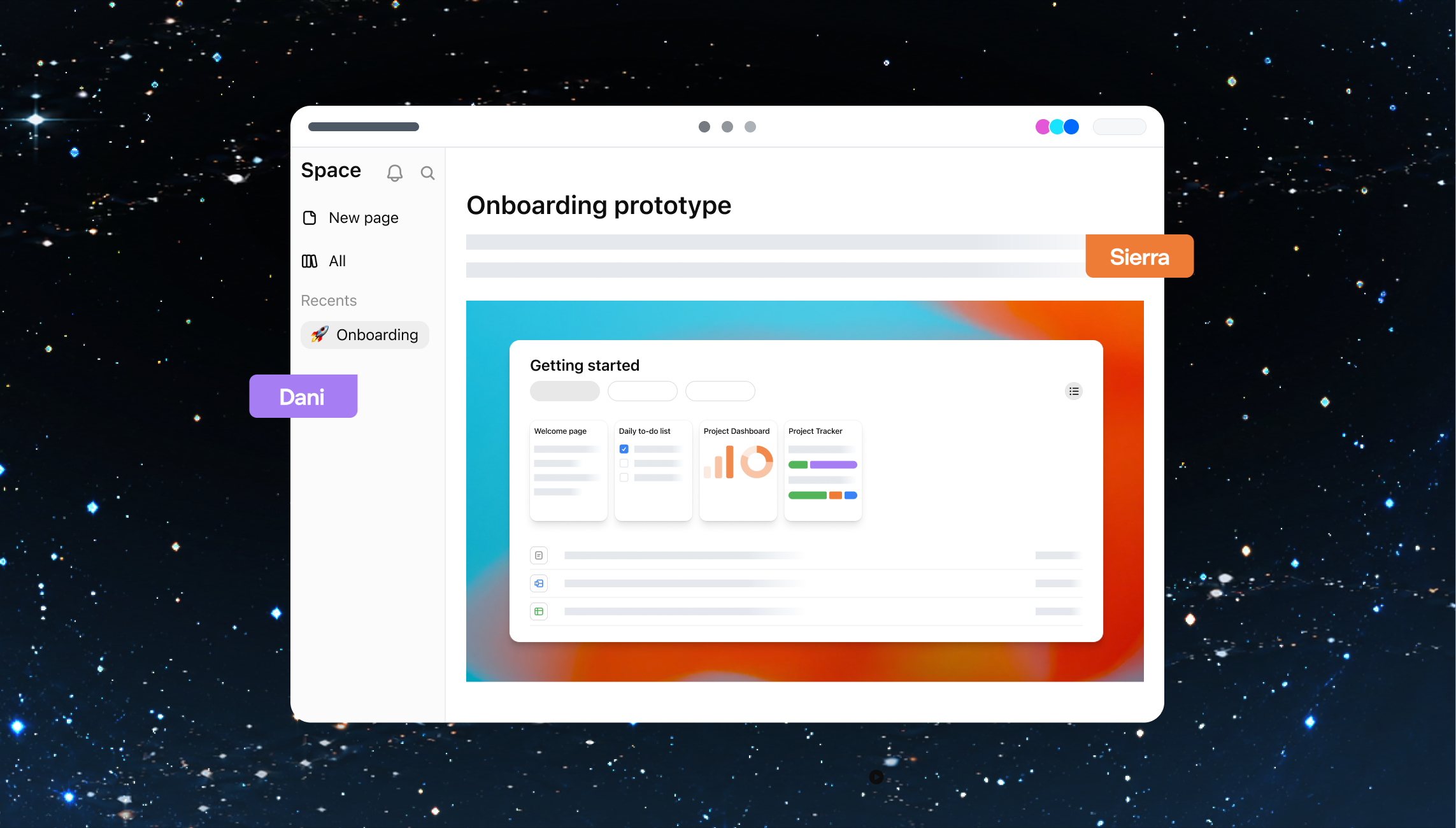
Shopify redesigns stores with AI, a new Main Street survey, business Skills for Amex cardholders, and an AI-built practice tool.
 |
| Friday, October 2, 2026 · Edition 324 |
Good morning. Shopify is giving merchants a new way to redesign their stores with AI. A survey puts numbers to small-business adoption, Perplexity packages everyday business tasks, and Google has updates for accessibility and cybersecurity. Also inside: a Friday workflow for learning a new workplace skill and a tool that keeps track of client decisions. |
|
TOP 5
Five stories worth your time.
|
|
01
Shopify is rolling out Canvas, a workspace that displays a store’s pages together and lets merchants change them with Sidekick, its AI agent. Owners can edit directly or describe what they want in chat, then preview the working pages with different products and screen sizes.
Sidekick can make coordinated changes across theme files, check its code and inspect screenshots as it works. Canvas is in early access for selected stores and works only on desktop, with Shopify-developed or custom themes. Third-party themes are not supported, and Canvas does not yet replace the existing editor.
Shopify / product announcement · Requirements and limitations · Oct. 1
|
|
|
02
Heartland Forward’s new survey finds that 43% of small businesses use AI, with adoption in heartland states matching the national rate. Among owners using it, 70% report a positive financial effect and 93% say it saves time. More than half of those users report saving at least five hours a week.
The training gap is specific: 83% of AI-using owners taught themselves by trying the tools. Among nonusers, 52% say they have not seen a need. Echelon Insights surveyed 691 owners online in September. These are owners’ self-reported experiences, which can help identify useful questions for a local business without guaranteeing the same returns.
Heartland Forward / research release · Oct. 1
|
|
|
03
Perplexity is giving eligible U.S. American Express small-business cardholders a collection of ready-made Skills inside Perplexity Computer. The workflows cover everyday work such as cash-flow forecasting and marketing campaigns, giving owners a defined task to start from instead of designing the whole process themselves.
Access requires a paid Perplexity Enterprise Pro or Enterprise Max subscription, both of which automatically renew. Eligible cardholders can also enroll for bonus Computer Credits and a targeted subscription offer. Check the eligibility and renewal terms before buying, review the permissions needed for business data, and have a qualified person check consequential financial outputs.
Upgraded Points / product and eligibility reporting · Oct. 1
|
|
|
04
Google launched Guided Vision in Gemini Live for compatible Android phones. Users share their camera and ask about what is in front of them. Gemini describes objects and text aloud, answers follow-up questions and gives spoken suggestions for adjusting the camera when it needs a clearer view.
The feature was developed with the accessibility community and Aira, including more than 1,000 trusted testers. Google lists uses such as reading appliance controls or locating an item on a table. It works on Android 9 and later where Gemini Live is supported. It can make mistakes and is not intended for navigation or obstacle detection.
Google / accessibility announcement · Oct. 1
|
|
|
05
Google announced Gemini 4 Argon for longer coding, research and professional tasks. The company says it can find and patch software vulnerabilities and sustain much longer outputs than its earlier models. Initial access is going to selected cybersecurity defenders through Google’s Fairwind Program while the company continues safety testing.
Google plans to expand access to paying API customers and AI Ultra subscribers, but it has not supplied a public release date. Its advertised introductory API price is $2 per million input tokens and $10 per million output tokens, with higher rates afterward. Those prices describe the planned rollout; most readers cannot use Argon yet.
Google / model announcement · Sept. 30
|
|
|
AI WORKFLOWS | FRIDAY: RAPID SKILL ACQUISITION
An AI-built practice tool can teach you when a customer problem needs a supervisor.
A WGU report released September 30 found that 60% of 3,128 U.S. hiring professionals surveyed say AI makes candidates’ real skills harder to evaluate. That gives Friday’s learning exercise a useful finish line: demonstrate a decision you can explain without AI supplying the answer.
Say you have just moved into customer service at an appliance-repair business. You need to learn which complaints you can resolve and which require a supervisor. A delayed technician, a disputed repair and a request for a replacement appliance call for different questions and different limits on what you can promise.
Have Claude Cowork retrieve the current service policy and approved resolved cases through your company’s connected apps, then build a private practice tool. Claude’s interactive artifacts can use AI to respond to your answers and save progress. This connected, saved-progress version needs a paid plan and enabled capabilities; company settings may restrict access. In the newer unified Claude experience, start from the main conversation.
You choose the skill and source boundaries. The agent gathers the material, creates fictional cases and adjusts the practice. Ask an experienced colleague to check its answer key against current policy before you rely on its feedback. Old resolutions may contain exceptions.
|
First attempt: Answer one unfamiliar complaint before seeing hints. Explain what you need to know and what you can promise. |
|
Targeted practice: If you miss an approval limit, the agent builds the next case around that mistake and cites the relevant policy afterward. |
|
Fresh test: Work through three new cases without hints. Your colleague checks your questions, reasoning and escalation choices. |
Give the agent this assignment
Build a private customer-service practice tool from the approved policy and case records. Identify conflicting or missing rules before building the answer key. Create fictional scenarios without customer details. Start with a diagnostic, then adapt practice to my mistakes. Withhold feedback until I commit to an answer; cite the policy behind each correction. Keep my progress in personal storage. Test the tool’s scoring against the approved answer key. Produce a short record of what I can explain and what still needs practice. Do not contact customers, change records or share my results.
For managers, review the fresh-case answers before assigning unsupervised customer work. A confident AI score alone cannot establish readiness.
Choose one complaint you currently hesitate over. Spend your first practice session learning where your authority ends.
|
|
|
AI TOOL SPOTLIGHT · Bracket
Bracket keeps track of client work as conversations change. Connect Gmail, Slack, Figma or GitHub, and it organizes scope, decisions, deadlines and deliverables, flags changes and helps draft replies. Try it on one approved project: compare its account of the latest deadline with the original conversation before using it in a client response. The first project has a 14-day, no-card trial. Listed U.S. pricing is $12 monthly for up to ten active projects, or $2 for one project active for 60 days. Review its access permissions and independently check all proposed changes before approving them or sending any client replies.
Bracket / official product details · Plans and pricing · Verified Oct. 1
|
|
|
MORE AI NEWS
Headlines
|
Work, learning and customers
In Preply’s international survey, 88% of professionals use AI for learning, while 49% still struggle to apply a skill after months of practice. The findings measure reported experiences, not tested proficiency.
Preply / commissioned research · Oct. 1
Synthesia’s Sessions lets employees rehearse conversations with an interactive avatar or turn a survey into a spoken interview. Roleplay and Survey Sessions are available now; product-guidance Expert Sessions are still coming.
Synthesia / product announcement · Oct. 1
Decagon introduced Voice 3, supporting more than 70 languages, alongside tools for onboarding and other customer tasks. A new gateway lets businesses identify customers’ personal agents and check what they are authorized to do.
Decagon / product announcement · Oct. 1
ResiDesk’s new tools connect property data and resident conversations, review leases against a customer’s rules, and answer prospective renters’ calls using current availability and pricing. The company says the features are available now.
ResiDesk / product release · Oct. 1
DoorDash is testing an assistant that finds food, builds a cart and handles checkout inside a text conversation after order confirmation. U.S. customers can join a beta waitlist; broad availability has not been announced.
DoorDash / product announcement · Sept. 30
|
|
Trust and public decisions
Aura’s survey of 2,000 U.S. AI users found 64% had granted an AI service account or data access without fully understanding its permissions. The results offer a timely reason to review connected accounts.
Aura / commissioned research · Oct. 1
Maryland Gov. Wes Moore says he and Indiana Gov. Mike Braun will work with other governors on an AI framework. The bipartisan effort is being organized; it has not produced new rules yet.
Associated Press / original reporting · Oct. 1
Judge Amit Mehta dismissed antitrust claims challenging Google’s use of publisher content and AI Overviews. The September 30 opinion found the complaints legally insufficient, a setback for publishers seeking compensation through those claims.
U.S. District Court via CourtListener / opinion (PDF) · Sept. 30
Federal and state agencies can now buy Claude for Government through a FedRAMP High environment, using prepaid usage with firm spending limits. Claude Code’s command-line interface and Microsoft 365 integration remain in early access.
Anthropic / product announcement · Sept. 30
RadarFirst’s new incident-management product records the AI system involved, supporting evidence, potential harm and the response. It is designed to coordinate privacy, security, legal and product teams when AI produces a harmful outcome.
RadarFirst / Business Wire · Oct. 1
|
|
Building and checking AI
Extract v2.5 adds native spreadsheet handling and stronger document citations, with unchanged per-page pricing. LlamaIndex reports improved results on its benchmark, including fewer missing entries in long lists and records that cross pages.
LlamaIndex / product announcement · Oct. 1
IBM announced self-hosted deployment for Bob, its AI software-development platform. Organizations can run it in private-cloud, on-premises or air-gapped environments when sensitive code and data need to remain inside their own infrastructure.
IBM / product announcement · Oct. 1
Sidero introduced an AI-focused Talos Linux foundation and Cupar, a console for managing models, GPUs and private data. Cupar has limited availability with production support; the company plans general availability for March 2027.
Sidero Labs / product announcement · Oct. 1
DeepKeep’s AI Lens for Developers checks file reads, shell commands and connected-tool calls against company policies. It supports Cursor and Claude Code now, including approval checks for destructive commands; other coding tools are planned.
DeepKeep / product announcement · Oct. 1
Ai2 released Olmo-core 3, open infrastructure for training large mixture-of-experts models. Its tests reached trillion-parameter configurations, but measured system performance rather than the quality of a finished model. The training code is available.
Allen Institute for AI / technical announcement · Oct. 1
|
|
Research and real-world deployment
AdventHealth is making OpenEvidence available across clinical roles, including nurses, pharmacists and physicians, within existing health-record workflows. The tool retrieves cited medical evidence; clinicians retain responsibility for care decisions and individual patient circumstances.
AdventHealth and OpenEvidence / Business Wire release · Oct. 1
Researchers report that Ataraxos defeated leading Stratego player Pim Niemeijer with 15 wins, one loss and four draws. The system trained for a few thousand dollars, testing ways AI can reason with hidden information.
Nature / peer-reviewed research · Sept. 30
YMX will finance, operate and support Outrider’s self-driving electric trucks at customer logistics yards. Initial deployments are planned this year for industries including food, retail and automotive. The agreement covers five years and is nonexclusive.
YMX Logistics and Outrider / partnership announcement · Oct. 1
Kyndryl opened its first U.S. AI Innovation Lab in the Dallas–Fort Worth area, with hands-on customer prototyping and local training partnerships. The company expects up to 300 skilled jobs over the next four years.
Kyndryl / company announcement · Oct. 1
Volantis raised an $88 million Series A to build an AI inference system using optical connections between computing and memory. Its proposed speed and capacity figures are engineering targets, not results from a commercially deployed product.
Volantis / funding announcement · Oct. 1
|
|
|
mAIn Street gives nontechnical readers useful AI news they can put to work.
mAIn Street #324 · Friday, October 2, 2026
Reporting checked through October 1, 2026.
|
|
|
|